Images

Best U.S. Cities to Build an ADU Rental in 2025

Accessory dwelling units—often called ADUs—are quickly becoming one of the most versatile and profitable ways for homeowners to generate passive income. Whether you’re envisioning a cozy short-term vacation rental, a long-term backyard cottage, or a flexible space for multigenerational living, ADUs offer exciting new possibilities for property owners.

With roughly 32.6 million Americans now working remotely, domestic travel on the rise, and demand for affordable housing at historic highs, the market for alternative rental options has never been stronger. And thanks to updated zoning laws, streamlined approvals, and even grants aimed at expanding affordable housing, many U.S. cities are making it easier than ever to build one.

A rustic single-story wooden cabin with a covered porch sits on a stone pathway in a dry open landscape at sunset.

But not all markets are equally supportive—and location is key when it comes to maximizing your ADU’s potential. Below, we’ve highlighted some of the best U.S. cities where homeowners face fewer barriers to backyard construction—and where demand for detached rentals, whether for short-term stays or long-term housing, continues to grow.


Los Angeles, California

Los Angeles may be known as the “City of Dreams,” but in recent years, it’s also earned another title: one of the top U.S. cities people are leaving due to skyrocketing housing costs. To combat this trend and address staggering housing costs, the city has rolled out several initiatives designed to make building accessory dwelling units (ADUs) easier and more appealing for homeowners. These programs often include reduced permitting fees, streamlined approvals, and even property tax exemptions for ADU owners, particularly those willing to rent to low- to moderate-income tenants.

A scenic view overlooking a city with houses among green hills, trees, and clear skies, with mountains in the distant background.

Even if income-restricted rentals aren’t part of your plan, it’s worth noting that Los Angeles remains one of the most desirable places in the country—if not the world—to live and visit. As the heart of the entertainment industry and home to world-famous attractions, beaches, and cultural landmarks, the city draws roughly 49 million visitors each year. This constant flow of tourists means ADU rentals here aren’t just practical—they’re highly profitable. Whether you’re catering to vacationers seeking a short-term stay near Hollywood or local professionals searching for affordable long-term housing, a well-designed ADU in Los Angeles offers a reliable path to steady passive income and increased property value.


Portland, Oregon

Second only to California, Oregon is one of the most ADU-friendly states in the country. Homeowners in many cities, from the southern valley to the central high desert and Portland in the north, can take advantage of ADU-specific grants, low-interest financing programs, permit fee waivers, and reduced building costs. Of all these cities, however, Portland offers the strongest potential for homeowners looking to profit from an ADU rental, especially those catering to short-term visitors or local professionals seeking flexible housing.

A vibrant city skyline with tall buildings surrounded by lush green trees and forests, and a distant snow-capped mountain under a clear blue sky.

One of the biggest reasons to build an ADU in Portland is its thriving tourism and short-term rental market. Visitors are drawn to distinctive, detached accommodations—from tiny homes and backyard cottages to converted garages tucked into quiet residential neighborhoods. In fact, many of Portland’s most desirable destinations are found in its vibrant Northeast and Southeast districts, where walkable streets, quirky shops, and craft breweries make staying in an in-neighborhood ADU particularly appealing. For homeowners, that demand translates into consistent bookings and an opportunity to generate meaningful passive income while adding long-term value to their property.


Seattle, Washington

Like Oregon, Washington is an incredibly ADU-friendly state, with the region allowing up to two ADUs per lot, removing strict owner-occupancy requirements, and easing parking restrictions in many urban areas. Seattle, in particular, has embraced these changes and streamlined the process of building backyard cottages and basement apartments, opening the door to new income opportunities for homeowners.

The Seattle skyline featuring the Space Needle in the foreground, with modern skyscrapers under a partly cloudy sky.

Combine that with the city’s thriving tech-driven economy, persistent demand for affordable housing, and steady influx of professionals seeking flexible living options, and it’s easy to see why Seattle is one of the most promising markets for ADU investment. For property owners, building an ADU here means reliable rental income, added property value, and a chance to help shape the future of housing in one of the Pacific Northwest’s fastest-growing cities.


Denver, Colorado

Over the past two decades, Denver has transformed from a laid-back mountain city into one of the fastest-growing urban hubs in the country. A surge of new residents in the 2010s—drawn by the city’s strong job market, access to outdoor recreation, and desirable semi-arid climate—fueled impressive economic growth and rapid urban development. However, that same boom has also driven housing costs sharply upward, creating challenges for both buyers and renters.

A cityscape of Denver, Colorado with a lake, fountain, yellow building, green trees, skyscrapers, and snow-capped mountains.

In response, accessory dwelling units have emerged as a mutually beneficial solution, helping homeowners offset rising housing expenses by generating rental income while expanding access to standalone, flexible housing for local professionals and new arrivals. Whether you’re purchasing property in Denver or already own a home within city limits, adding an ADU offers a proven way to boost your property’s value and contribute to the city’s broader push for more affordable housing.


Where Will You Build Your ADU?

No matter where you live, accessory dwelling units represent one of the most flexible and forward-thinking ways to generate passive income and add lasting value to your property. As cities across the country continue to embrace ADUs as part of broader housing solutions, opportunities for homeowners are more abundant than ever.

While Los Angeles, Portland, Seattle, and Denver stand out as some of the best cities to invest in an ADU rental today, they’re far from the only places worth considering. Smaller cities like Bend, Oregon, and Portland, Maine, are making headlines with streamlined permitting processes and rising demand for alternative housing, while Southern California as a whole remains a powerhouse market for vacation rentals and backyard units thanks to its year-round tourism and generous ADU incentives.

With the right location and thoughtful planning, your ADU can become more than just extra space—it can be a lasting investment that builds equity and adds value for years to come. Ready to explore your options? Our team is here to help. Request a personalized quote or call us at (888) 975-2057 to speak to a representative and start planning your ADU project today.


Introducing Our New Barndominium Kits

Barndominiums aren’t just a passing trend—they’ve steadily grown in popularity over the past decade and remain one of the most sought-after home styles of the 21st century. Originally defined as part barn, part condominium, these spaces have since evolved into something far more versatile—and a little less traditional than their name suggests.


Today’s barndominiums can be just about anything: cozy full-time residences, stylish vacation homes, shops with living quarters, creative studios, or multi-use spaces with garages, gyms, or workshops. They also span a wide range of aesthetics, from nostalgic farmhouse and barn-inspired builds to modern-rustic and contemporary.


A large, two-story modern barn home with a metal roof, wide wraparound porch, and warmly lit windows set in a grassy field at dusk.


In celebration of their adaptability, we’re excited to introduce our new line of barndominium kits—each one designed with open floor plans, modern exteriors, and seamless indoor-outdoor connections. Featuring striking window walls, sleek rooflines, and flexible layouts, these kits make it easy to create a space that feels entirely your own.


Take a look below to see what’s new and imagine the possibilities for your future build!


The McCall


The McCall is the smallest of our new barndominium kits, offering cozy living with smart functionality. This two-bedroom, two-bathroom layout is anchored by a generous covered porch—the perfect spot to enjoy your morning coffee or an evening wind-down. The bedrooms, including a spacious primary suite, sit on opposite ends of the central living area for privacy and comfort. A laundry room and two-car garage round out the design for added convenience.


  • Total Square Feet: 2,424
  • Conditioned Square Feet: 1,333
  • Best For: Homes, Vacation Properties, Commercial Spaces, Wineries & Tasting Rooms, Breweries


Learn more about The McCall Barndominium Kit here


The Pocatello


Named after “The Gateway to the Northwest,” the Pocatello is a charming two-bedroom, two-bathroom barndominium with standout curb appeal. Its striking window wall floods the open-concept living space with natural light, making it ideal for entertaining or relaxing. Bedrooms are tucked toward the back for privacy, while a laundry room and two-car garage add everyday functionality. Multiple covered outdoor spaces make this model especially versatile.


  • Total Square Feet: 2,467
  • Conditioned Square Feet: 1,385
  • Best For: Homes, Vacation Properties, Commercial Spaces, Wineries & Tasting Rooms, Breweries


Learn more about The Pocatello Barndominium Kit here


The Caldwell


As the largest in our new collection, the Caldwell offers over 2,700 square feet of customizable living space. This three-bedroom, two-bathroom design combines dramatic vaulted ceilings with a wide-open floor plan, creating a spacious and inviting atmosphere. Bedrooms and bathrooms are set toward the back, while a roomy laundry area and two-car garage balance practicality with style. The Caldwell is a perfect option for those who want both flexibility and a bold design statement.


  • Total Square Feet: 2,725
  • Conditioned Square Feet: 1,682
  • Best For: Homes, Vacation Properties, Commercial Spaces, Wineries & Tasting Rooms, Breweries


Learn more about The Caldwell Barndominium Kit here


Build Your Dream Barndominium


No matter how you picture your barndominium—whether it’s a family home, a creative retreat, or a unique business space—we’re here to bring it to life. Ready to start your build? Request a quote here or give us a call at (888) 975-2057. Our team is just a click or call away.


Your Plans for Next Summer Start Now

Maybe you’re dreaming of a beautiful custom home, a hobby workshop or garage, or a horse barn with a covered riding arena just steps away. Whatever the case may be for your project, there’s never been a better time to get started on your build than the present moment.

Spacious living room with exposed beam ceiling, stone fireplace, cozy sofas, big windows, wood floors, rustic decor, outdoor view.

Fall is often thought of as the beginning of school for many parents or academics, but here, we like to think of it as primetime for project kickoffs. When you consider that our process—from design to delivery—takes about 5 to 8 months on average, it makes perfect sense why the upcoming season provides an ideal time for design and material preparation.

Starting your design now allows you to prep your build for spring or summer construction, making it easier, faster, and safer for you and your building crew to assemble your design and materials package. While some clients may opt for a winter build, especially if they’re located in more temperate regions like Southern California or the Hawaiian Islands, this inevitably comes with more weather delays, limited daylight, and potentially greater costs. By initiating the design process now, you can plan for a smoother, more streamlined construction phase, providing you with greater peace of mind and savings opportunities on your investment.

A worker kneels on an OSB plywood floor, using a power drill and metal template outdoors in snowy weather. Construction equipment and snow-covered ground are visible in the background.

Additionally, finalizing your plans early enables you to secure building permits before the spring rush, reserve contractors ahead of peak season, and acquire materials before demand drives up lead times and costs. This preparation not only keeps your project on schedule but also ensures you’ll be ready to break ground as soon as conditions allow—so you can start enjoying your new space by next summer.

Ready to start exploring your options for a brand-new build? Browse our extensive line of pre-engineered building kits or request our digital product catalog here, and start dreaming up the possibilities for your project!


Creating a Self-Sufficient Garden or Backyard Space

Everyone has a unique vision for their perfect home life, but for us green thumbs, that vision almost always includes a beautiful backyard space filled with thriving plants, trees, and happy pollinators. Having a place where we can sit in nature, grow our favorite fruits and veggies, and care for the creatures that sustain our natural habitats is a dream come true—that is, at least, until the upkeep takes over.

Thankfully, nature gives us plenty of ways to work smarter when it comes to designing self-sustaining gardens that bloom on their own. From planting native species that thrive with little effort to capturing rainwater and composting to enrich the soil, here are a few ways to create a self-sufficient outdoor space that benefits you, your garden, and the planet.

Implement a Rainwater Harvesting System

Capturing rainfall is one of the simplest and most rewarding ways to provide your garden with a steady supply of clean, chlorine-free hydration. By collecting roof runoff in barrels or storage tanks, you can turn every rainy day into an opportunity to nourish your plants naturally, while reducing utility costs and conserving a vital resource.

A basic setup, including a downspout diverter and hose, is all you need to get started. For even greater efficiency, we recommend connecting your rain barrel or tank to a soaker hose for hands-free, evenly distributed watering that keeps roots happy and soil thriving.

A large community garden with raised beds filled with plants sits in front of a gray barn-style building under a partly cloudy sky, surrounded by fields, trees, and white fences.

If you’re looking to go a step further, or if your yard has slopes or drainage issues, consider incorporating swales—shallow trenches that redirect water—or dry wells to capture and slowly absorb excess rainwater. These passive systems work in conjunction with your rain barrels to deliver water exactly where your garden needs it.

Compost Kitchen and Yard Waste

Tempted to toss food scraps and yard clippings into the trash? Consider turning them into nutrient-rich compost that feeds your garden. Banana peels, coffee grounds, grass clippings, and fallen leaves can all be transformed into a natural soil enhancer that boosts fertility, reduces erosion, and helps your plants flourish.

Composting is one of the easiest ways to reduce household waste while enriching your soil with organic matter. By making it part of your regular garden routine, you’ll create a sustainable and waste-free system that supports healthier plants, retains moisture, and reduces your reliance on synthetic fertilizers.

Plant Native and Drought-Resistant Species

When it comes to building a low-maintenance, high-impact garden, native plants are some of the best allies you can have. Naturally adapted to your region’s soil, weather, and water conditions, these plants thrive with little intervention, making them an ideal foundation for any self-sustaining space.

A small wooden cabin sits among desert plants and cacti, with a vast mountain range in the background under a clear blue sky. The scene is bathed in warm, golden sunlight.

Not only do native and drought-resistant species conserve water and reduce the need for pesticides, but they also create vital habitats for pollinators, birds, and other beneficial wildlife. By choosing plants that are already at home in your climate, you’ll spend less time maintaining your garden and more time enjoying it—all while doing your part to preserve biodiversity and protect natural resources.

Use Sheet Mulching to Build Healthy Soil

If you’re starting a garden from scratch, sheet mulching is one of the easiest and most sustainable ways to prep a new garden bed. This layered method uses everyday materials like cardboard, dried leaves, compost, and soil to smother grass, build up organic matter, and create rich, plant-ready ground.

A large, modern barn-style building with warm lights is surrounded by a field of wildflowers and trees at dusk. The building features wood and dark trim accents, with a clear sky in the background.

Rather than stripping away turf with a shovel or rototiller, sheet mulching works with nature to break down grass and weeds over time while preserving the fertile topsoil layer beneath. It takes some patience—typically one to two months—but the soft, nutrient-rich soil you get by the end makes the perfect foundation for growing everything from flowers to veggies.

Incorporate Natural Pest Control Methods

Lastly, keeping pests at bay doesn’t have to mean harsh chemicals or constant intervention. With the right mix of companion plants, beneficial insects, and smart garden design, you can protect your greenery the natural way.

Plants like marigolds, basil, lavender, and nasturtiums can deter common pests such as aphids, mosquitoes, and beetles, while adding beauty and fragrance to your space. Meanwhile, attracting helpful predators like ladybugs and birds can keep harmful insects in check without disrupting the environment in which your plants grow.

Bringing It All Together

A self-sufficient garden doesn’t just save time and resources—it deepens your connection to nature and allows it to thrive right outside your door. With a few thoughtful additions or changes, you can cultivate a greener, more resilient backyard that’s easier to care for and all-around beneficial for the environment.

DC Summit 2025 | The Year of Relationships

Why did we choose relationships as one of our four core values?


Because we believe relationships are both the catalyst and the sustainer of what makes DC so special. Not just the work we show up to every day, but the teams we work with, the clients we serve, and the projects we bring to life. Without meaningful connection, there are no dreams to build—and no builders to bring them to life.

In the spirit of this, the DC team comes together every year to strengthen both departmental and cross-team relationships through a full week of bonding, team building, and—if we’re being honest—very little sleep.

Last week was our yearly summit, and while we hope the images speak for themselves, it’s still worth stating how much we value this time together. Not just to get to know each other more, but to grow as individuals and as teams to better serve our past, current, and future clients.

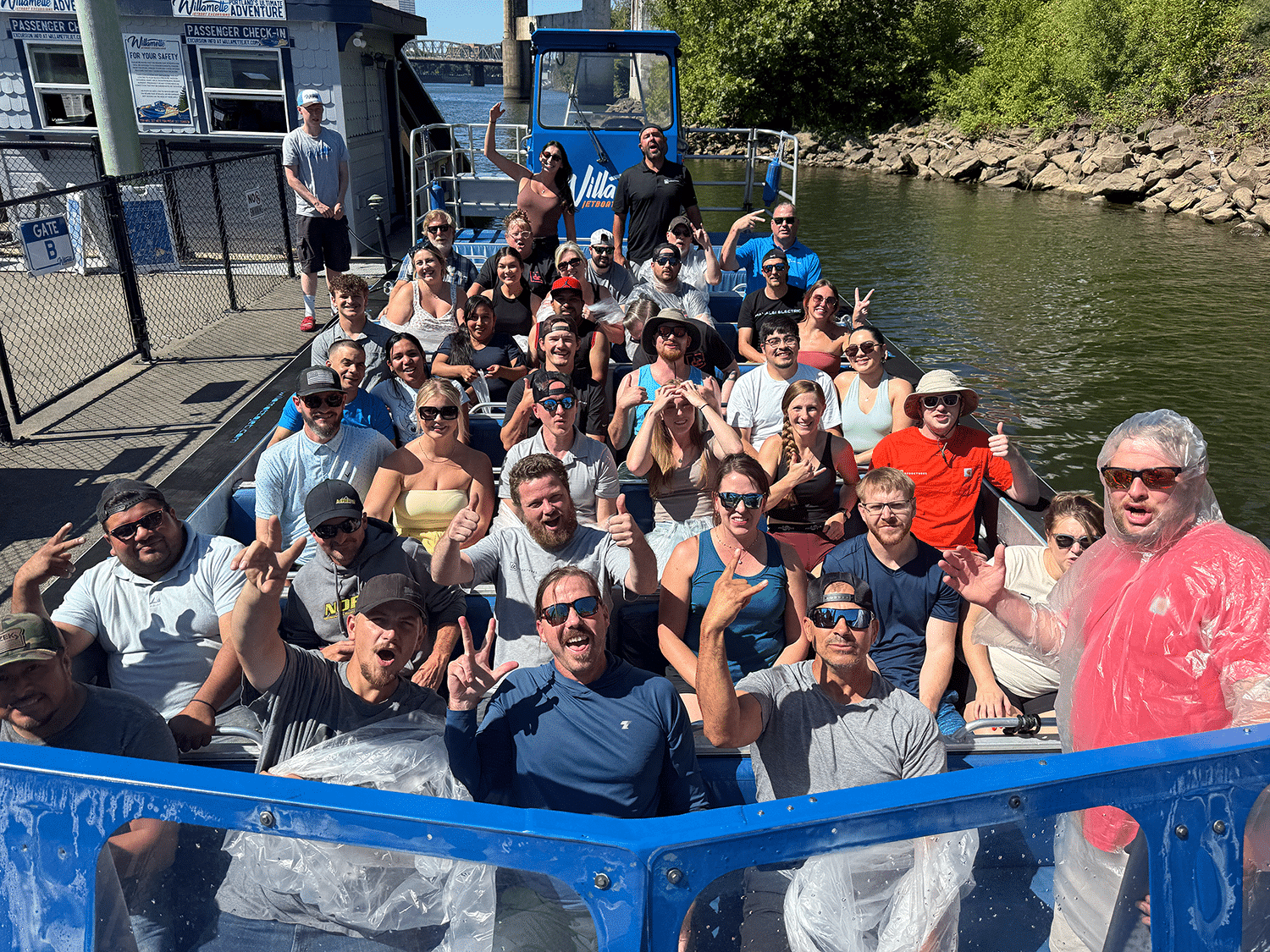
A large group of people sits on a blue boat, smiling and making peace signs or thumbs up. Some wear sunglasses and ponchos. The boat is docked by a rocky shore on a sunny day, with trees and a bridge in the background.

Highlights


Five people stand on grass in front of a scenic landscape at sunset, smiling and posing playfully. They are casually dressed and holding drinks, with hills and vineyards in the background.Monday
We started the week off with a keynote from motivational speaker and author Steve Fortunado, a fantastic session that got everyone thinking deeper about curiosity, hospitality, and gratitude. We wrapped the day with a welcome ceremony at Pete’s Mountain, a stunning vineyard & winery overlooking the Willamette River and Mt. Hood.

Thursday
After lunch, much of the team headed off for a speed boat ride through Portland. Some were splashed, some were soaked, but all had an awesome time! That night we kept things a bit more relaxed with drinks and close-up magic at The Garden Tavern—that was until we all borrowed sports jerseys to snap a fun photo together!

Friday
We closed out the week with a heartfelt wrap-up ceremony that featured our very own Randy Green’s legendary BBQ, an ice cream party from Ben & Jerry’s, and axe throwing to bring out our competitive side one last time.

A large group of people in various basketball jerseys, including Portland Trail Blazers, poses and smiles together inside a lively bar with menu boards and red decor in the background.

This week reminded us why relationships are more than a value—they’re our foundation. Every moment of this week added to the strength and spirit of our team, and we left this week more connected, more inspired, and more committed than ever to building something great—together.

Curious what it’s like to work with us? Give us a call at (888) 975-2057 or request a quote today!