There’s a version of your build that stops at the walls, and then there’s the version where the walls are almost beside the point. A version where the kitchen and the back porch talk to each other in the same design language, where summer evenings happen in a place that feels less like “the outdoors” and more like another room that’s somehow still part of the interior of your home.
That second version doesn’t happen by accident. It starts with a few deliberate decisions early in the design process, while you still have room to make them. Here’s what to think about.
Start with your windows: specifically, where they open
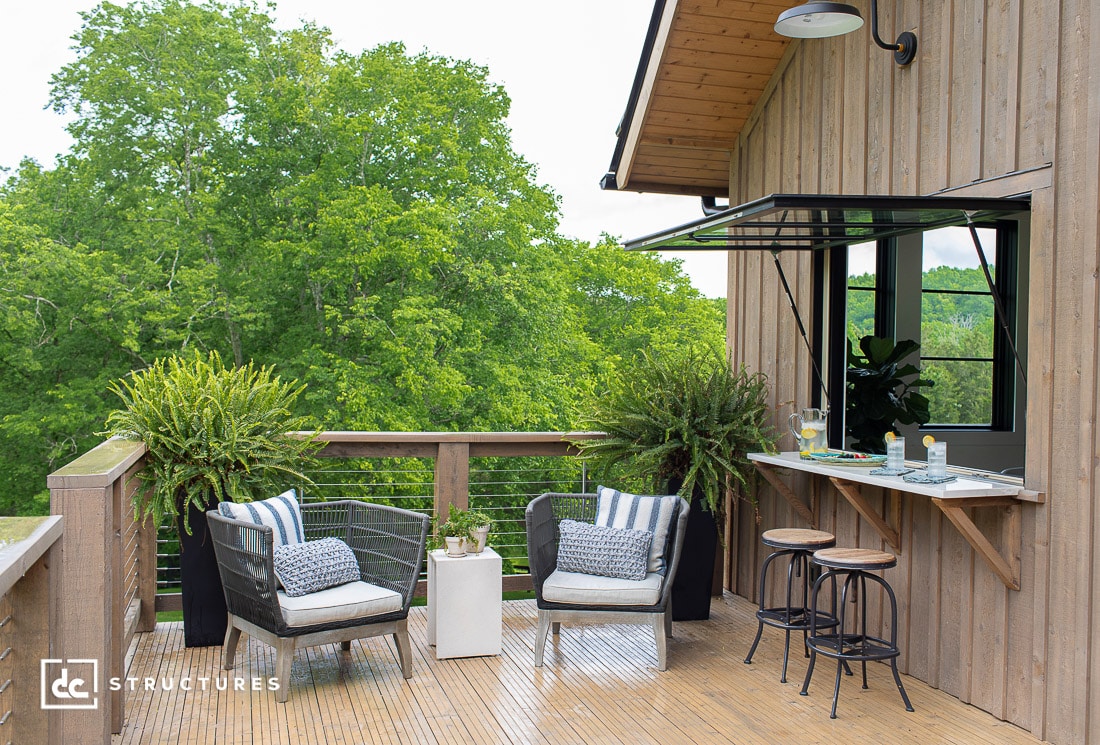
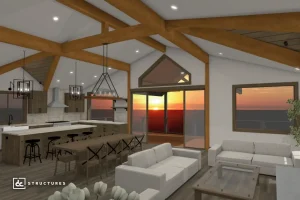
There’s a meaningful difference between a window that lets light in and a window that connects you to what’s outside. A pass-through window above a kitchen counter, for instance, does something a regular window simply can’t do: it makes the patio feel like an extension of the kitchen rather than a separate destination. You’re not walking outside to where the food goes; the food is already there. It’s a small thing that changes how you use a space every single day.
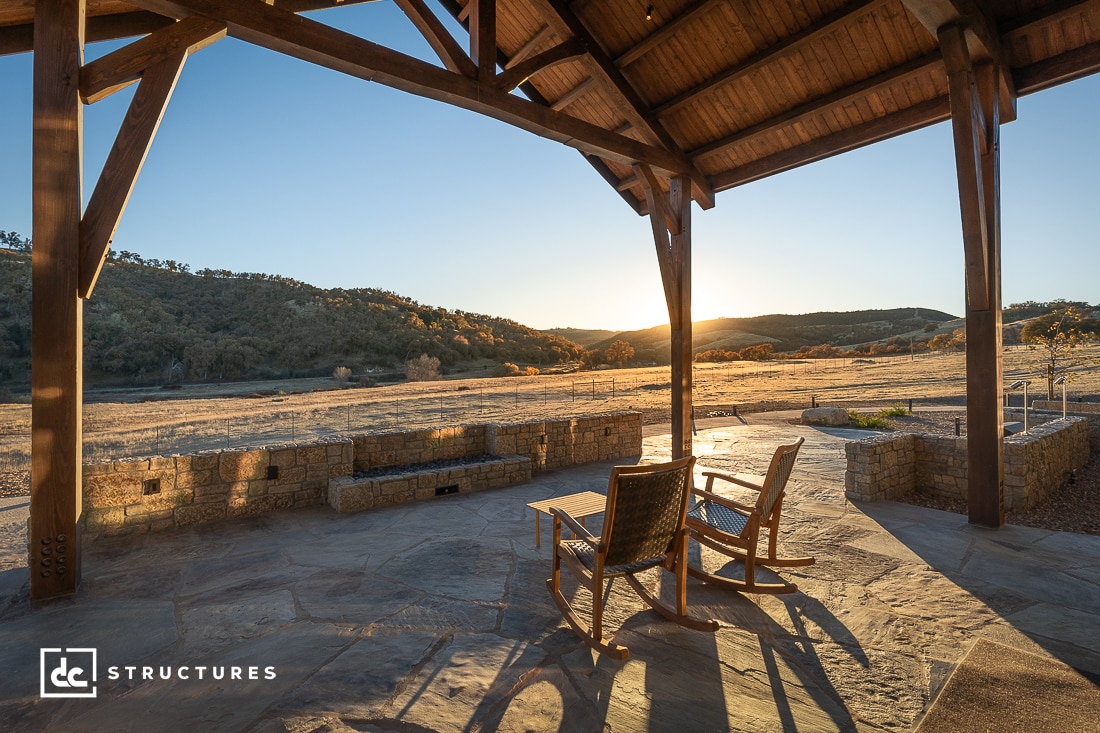
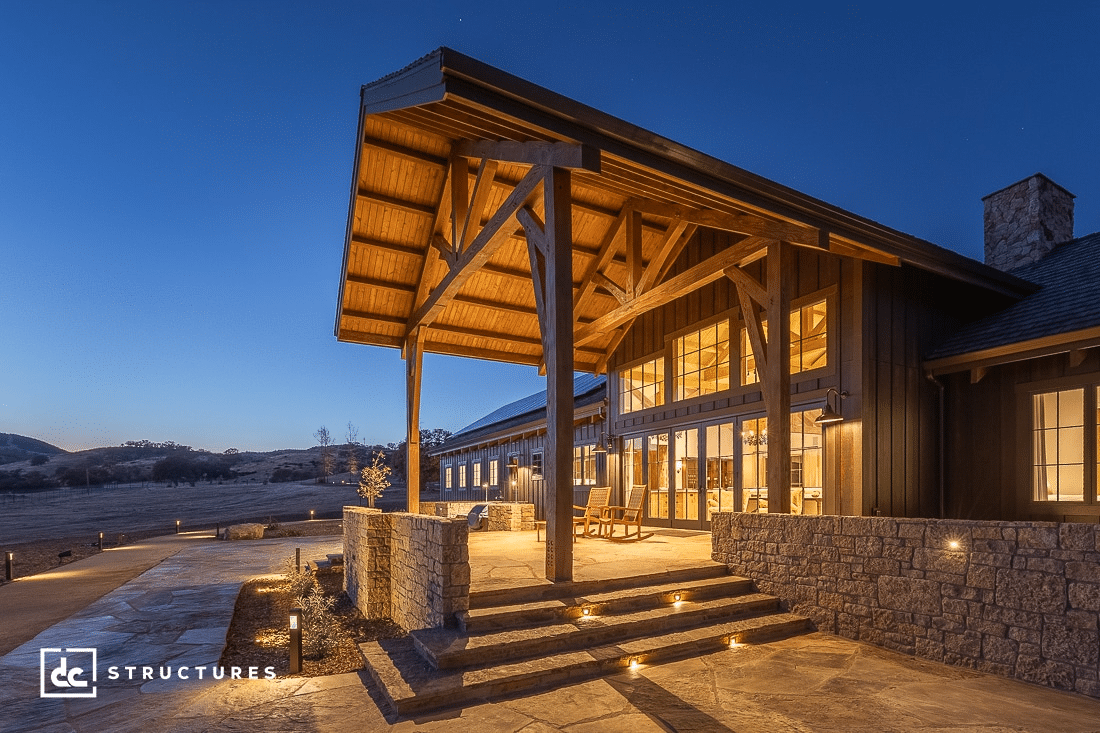
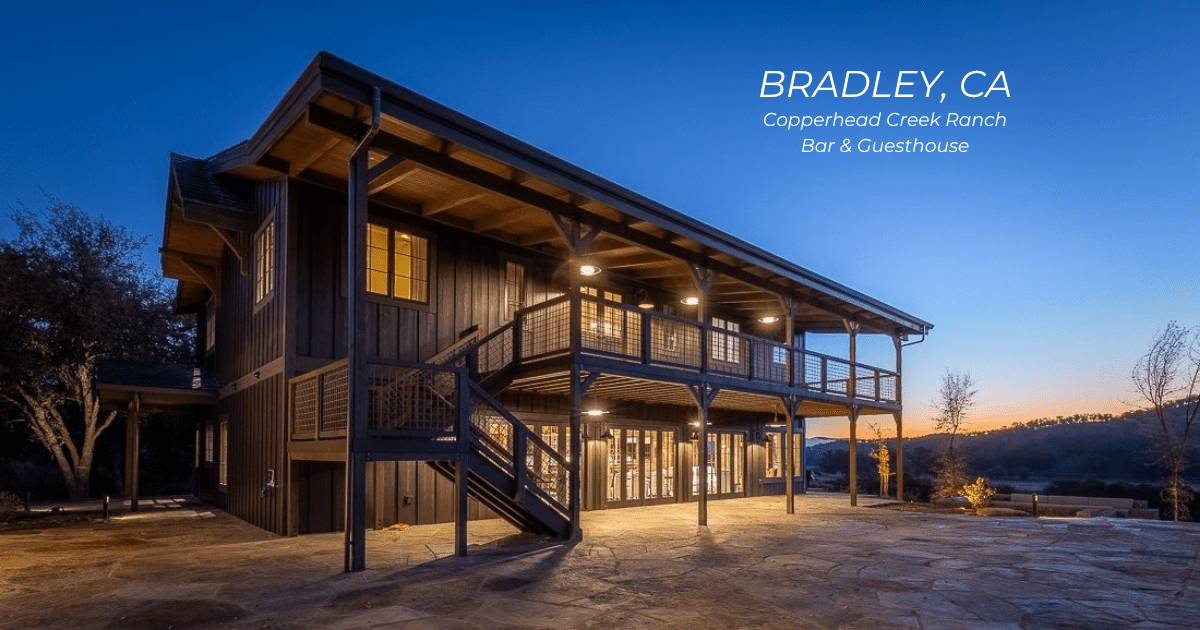
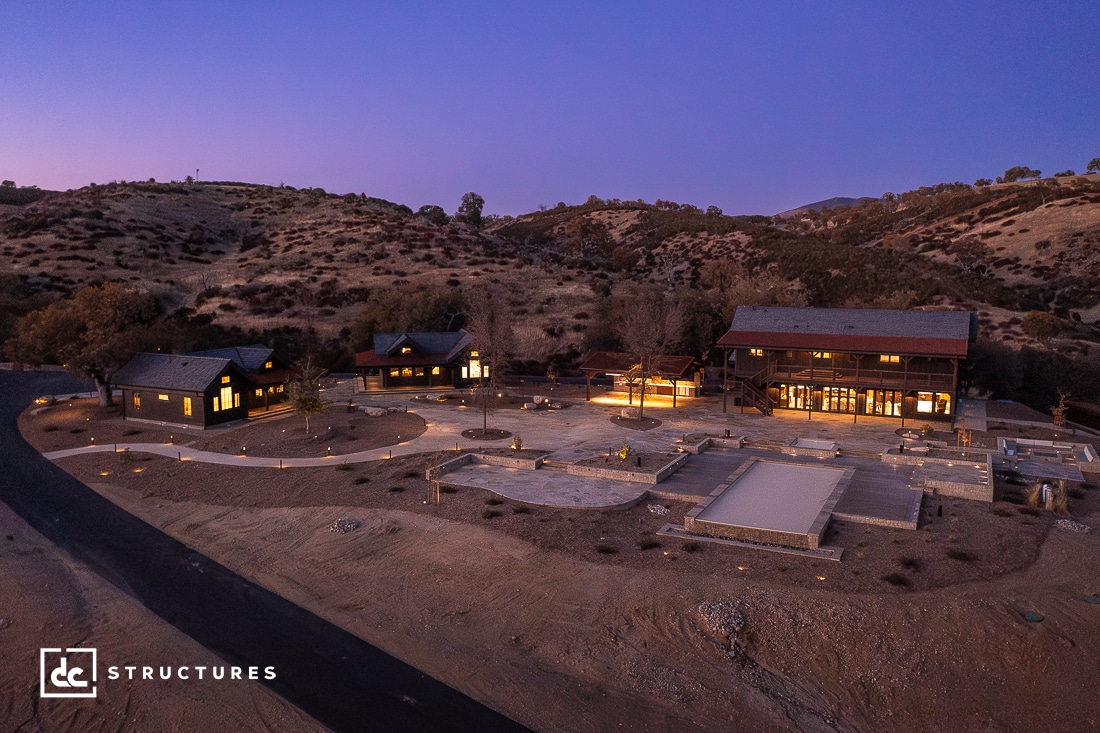
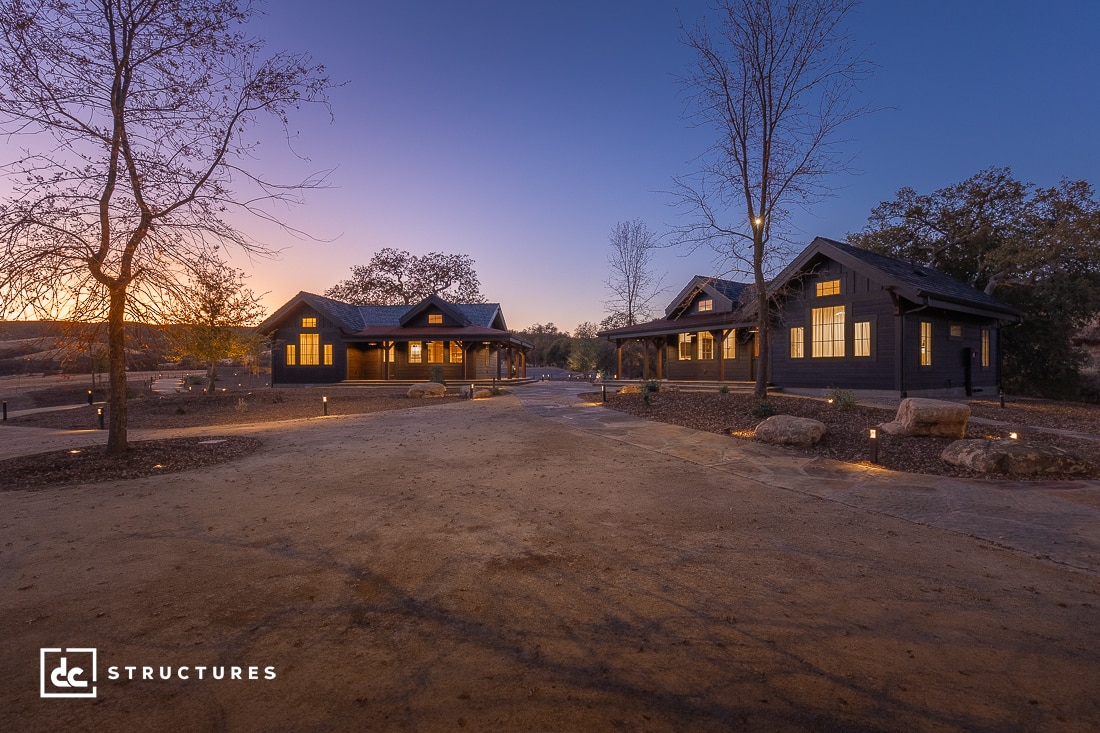
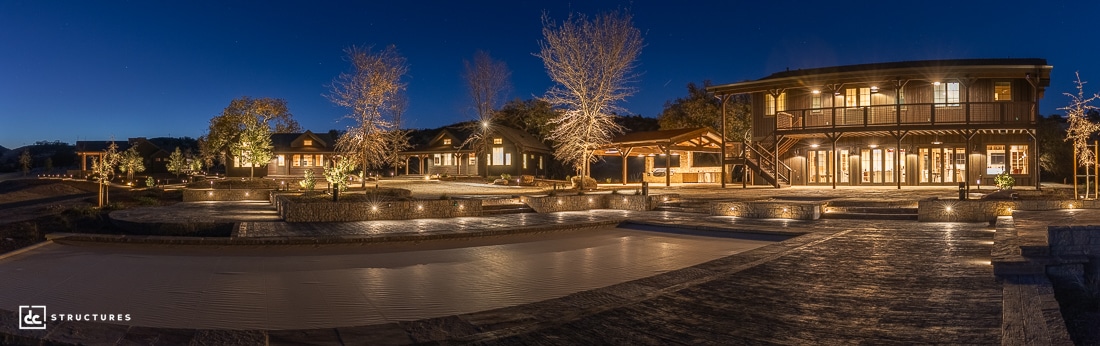
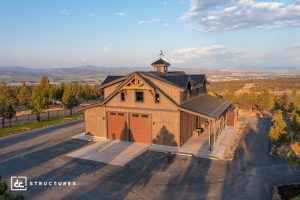
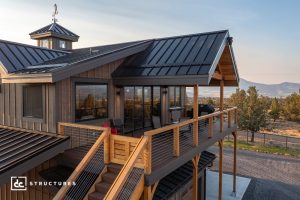
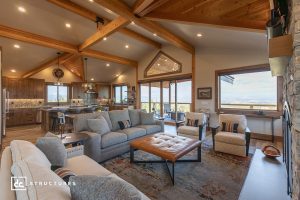
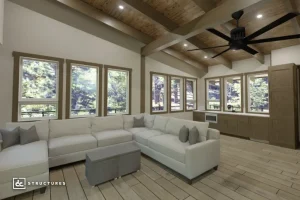
The same logic applies to window walls and hinged patio doors. The Copperhead Creek Ranch Timber Home in Bradley, California, uses a gridded window wall with hinged patio doors in the great room, and what our clients got is a living space that doesn’t feel like it ends at the back of the house.
When you’re deciding where and how your windows open, it’s worth asking yourself, “which view do I actually want to live with, and how close do I want to get to it?”
Think of the patio as a room, not an add-on
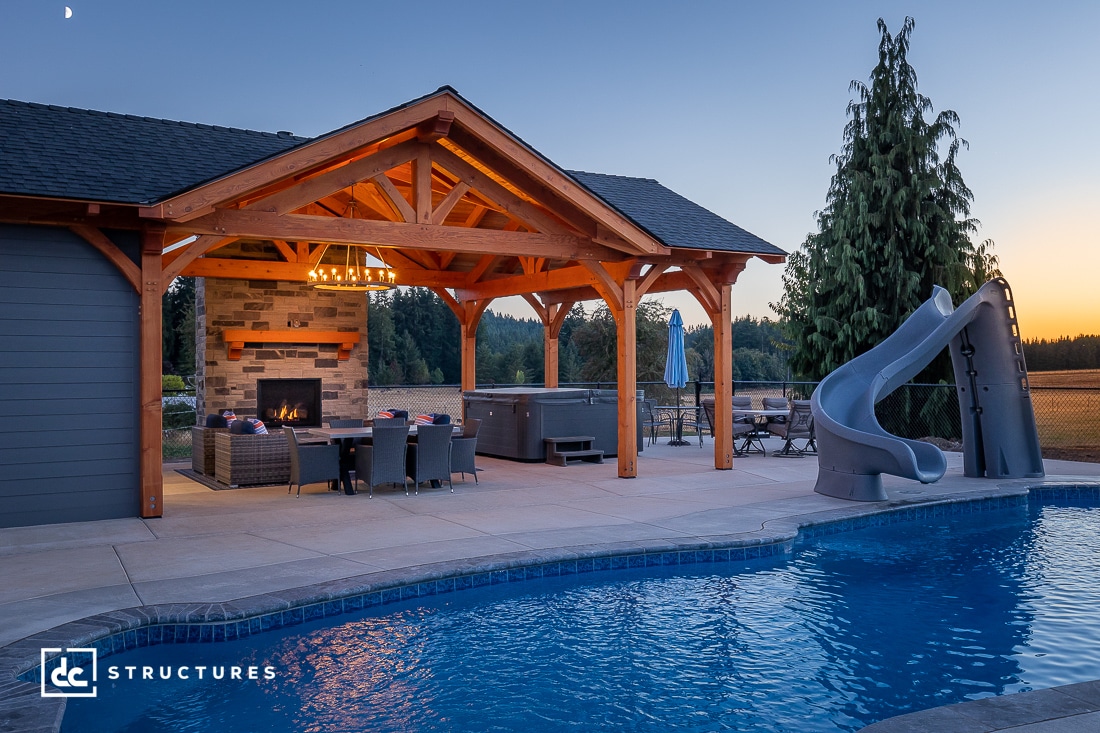
One of the most common missed opportunities when customizing your kit is treating the outdoor space as something to figure out last minute after the structure is done. The outdoor space that feels most intentional is the one that got designed at the same time as everything else, with a covered roof overhead so you’re not hostage to the weather, a clear sight line from inside, and a layout that works for how you actually want to use it.
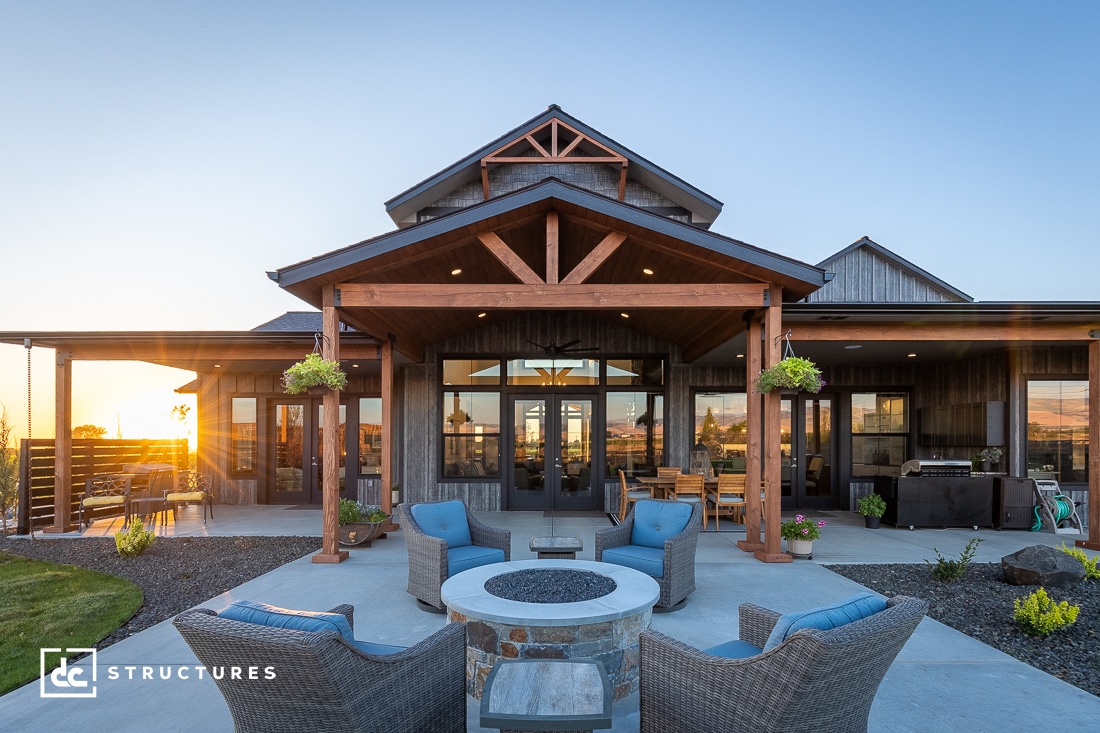
The Washington Modern Farmhouse in Walla Walla, Washington is a good example of this done right. Hinged dining room doors open directly to a covered porch with a fully equipped outdoor kitchen, a fire pit, and multiple seating areas. This space wasn’t treated as an afterthought, but as a deliberate continuation of how the main floor lives. What our clients got is a backyard setup that is truly functional without the owners having to rethink the space each time.
Make the outdoor area earn its square footage
The outdoor space that gets used the most is almost never the biggest one; instead, it’s the one that’s set up to do something specific. We’re talking a built-in grill and counter, or covered pavilion that gives you shade, or a fire pit placed strategically where you actually envision your dinner parties ending up after a glass of wine or two.
When you’re designing your kit, this is the part of the brief that’s easy to leave vague. But if you can describe what you actually want to do out there, whether it’s hosting dinners, watching sunsets, or riding out a thunderstorm with a drink in hand, the design decisions start to make themselves.
Two kits worth looking at for fantastic indoor-outdoor flow
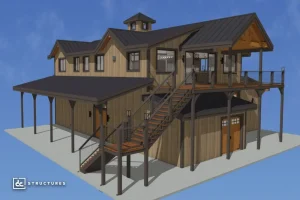
If this is the direction you want to take your build, our Oakridge Apartment Barn Kit is worth a close look. Its open, flexible floor plan and available loft configurations make it easy to orient the main living space toward a specific view, and the five standard sizing options give you room to design a covered porch or outdoor deck that actually fits the footprint. For a more barn-like look, the Columbia Gable Barn Kit has been modified by owners into everything from working barns with outdoor entertaining areas to full residential builds with wraparound porch additions. With the Columbia, the bones are versatile enough to take the design wherever you want it to go.
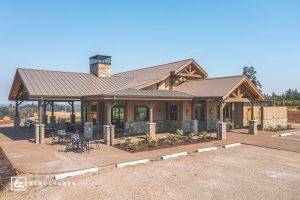
And if you really want to commit to the outdoor living concept, it’s worth knowing that one of our Pavilion & Pergola Kits isn’t just a nice-to-have, it’s square footage. A covered outdoor structure adjacent to your main build gives you a dedicated space that functions like a room year-round, and it’s one of the most effective ways to extend how your property lives without adding to the main structure.
Ready to start that conversation? Request a quote here or give us a call at (888) 975-2057. One of our project coordinators will be happy to chat with you!
Some clients’ dreams don’t start with an exact blueprint. Instead, they start with a feeling, a vision of what could be, and the willingness to figure out the rest along the way.
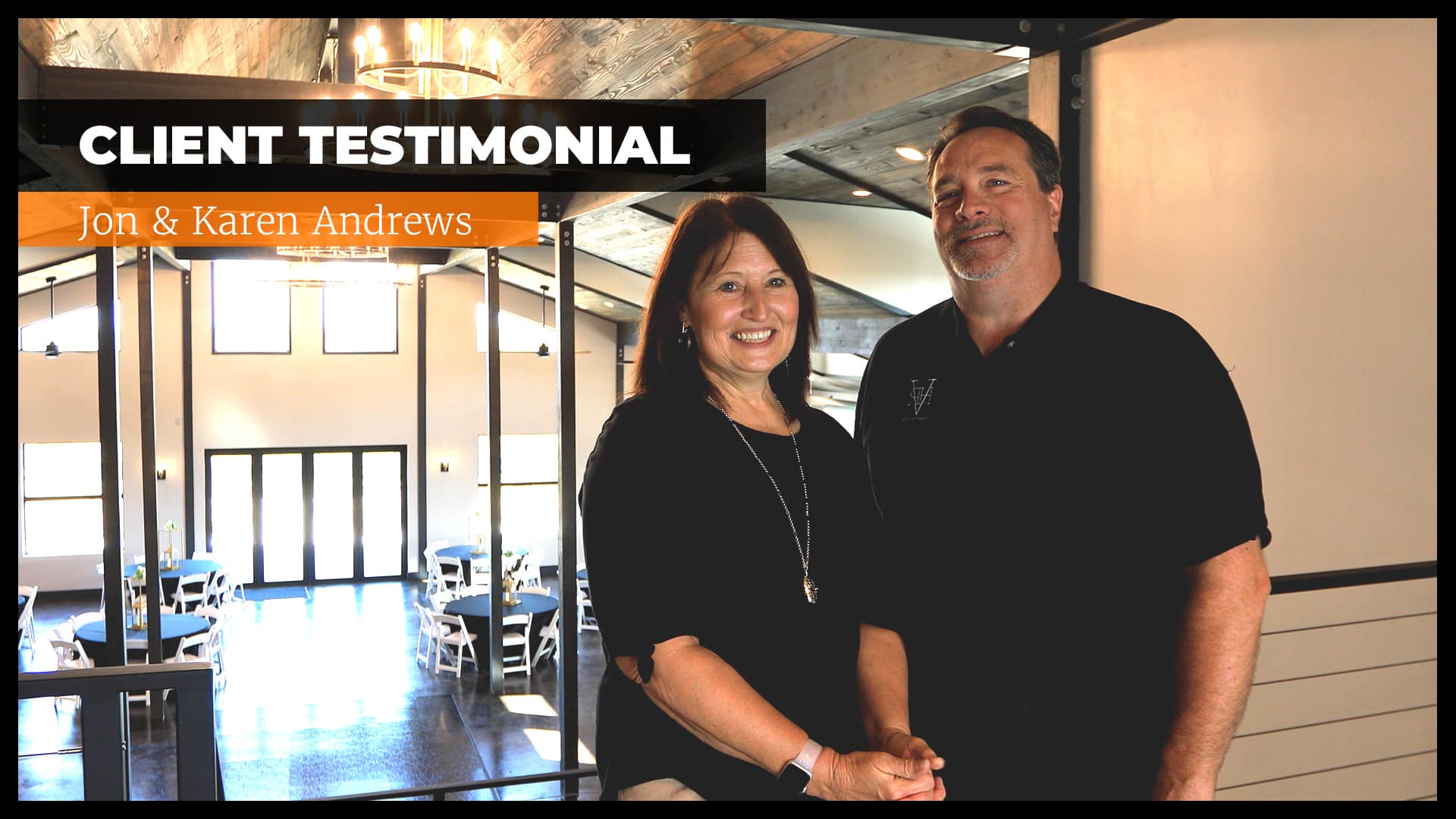
For Jon and Karen Andrews, owners of Hidden Vista Ranch in Thorndale, Texas, that vision was clear: a beautiful, welcoming space where couples could celebrate the most important day of their lives.
“We love serving people,“ Karen shared. “We had a vision of having brides and grooms here and hosting many weddings, and that’s what we use it for.“
The dream was real. The path to building it? That part took a little research.
Finding the Right Kit (and the Right Company!) for the Job
Like many first-time builders tackling a large commercial project, the Hidden Vista team turned to the internet. They were looking for a kit-based solution that would let them move quickly without sacrificing quality. DC Structures (that’s us! Hi!) kept rising to the top of their search results, and after connecting with the sales team, things started clicking into place.
“Zachary was just amazing in how he helped us think through what kit would be in line with what we wanted to accomplish,“ Jon recalled.
For a first-time large-scale build, having that kind of guidance made all the difference.
They chose DC Structures’ Sunnyside Event Barn Kit as their base, then worked with the team to customize it into something truly one-of-a-kind.
Built for the Moment
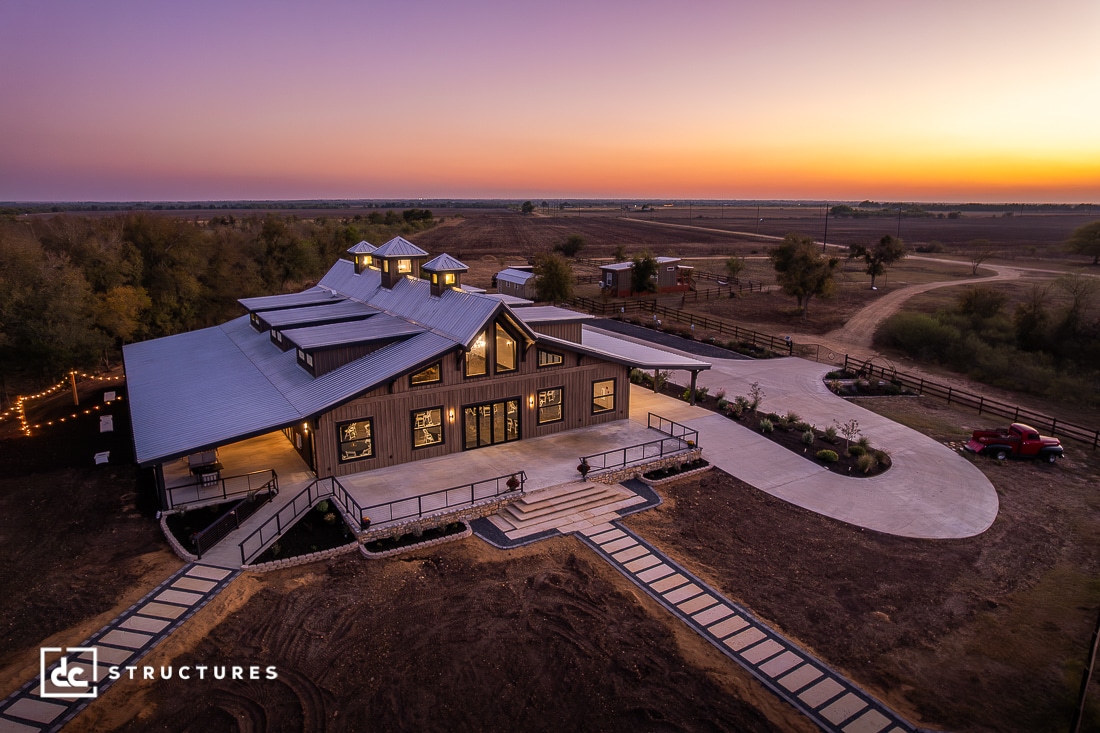
The result is stunning. At 7,599 square feet, Hidden Vista Ranch is a full-featured wedding venue designed to host up to 220 guests.
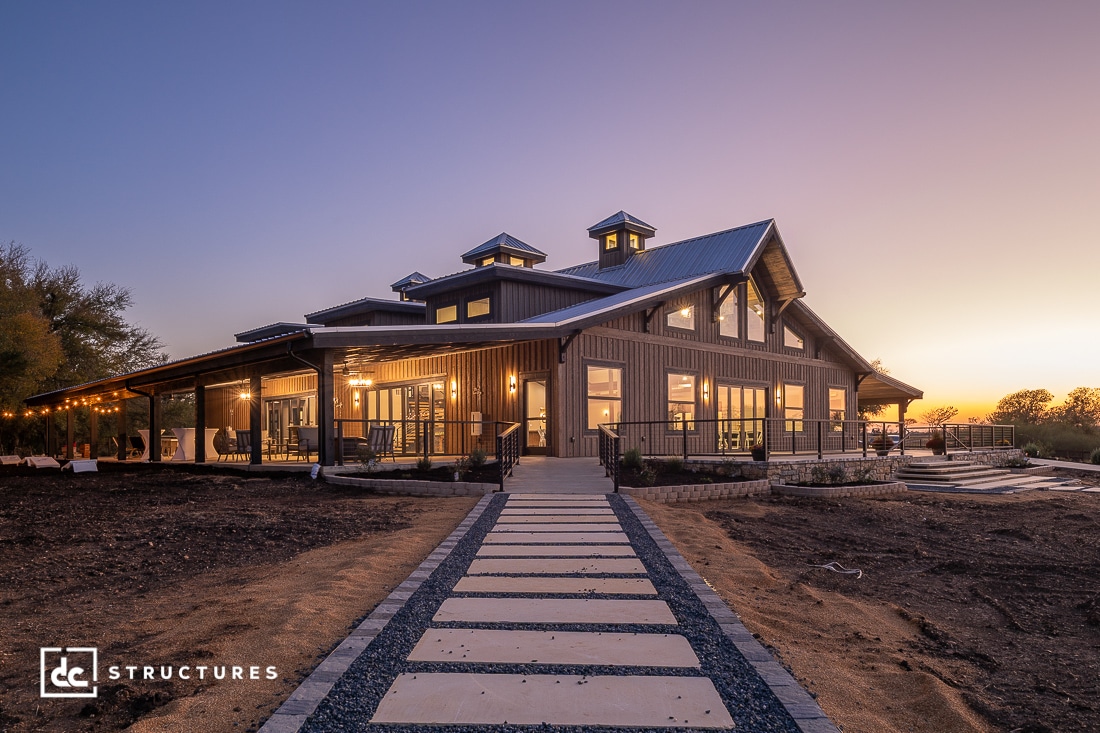
Outside, the venue makes a bold first impression with an eclectic mix of picture windows, asymmetrical windows, and black trim. Two large covered patios extend from the roofline on either side of the entrance, giving guests a place to gather.
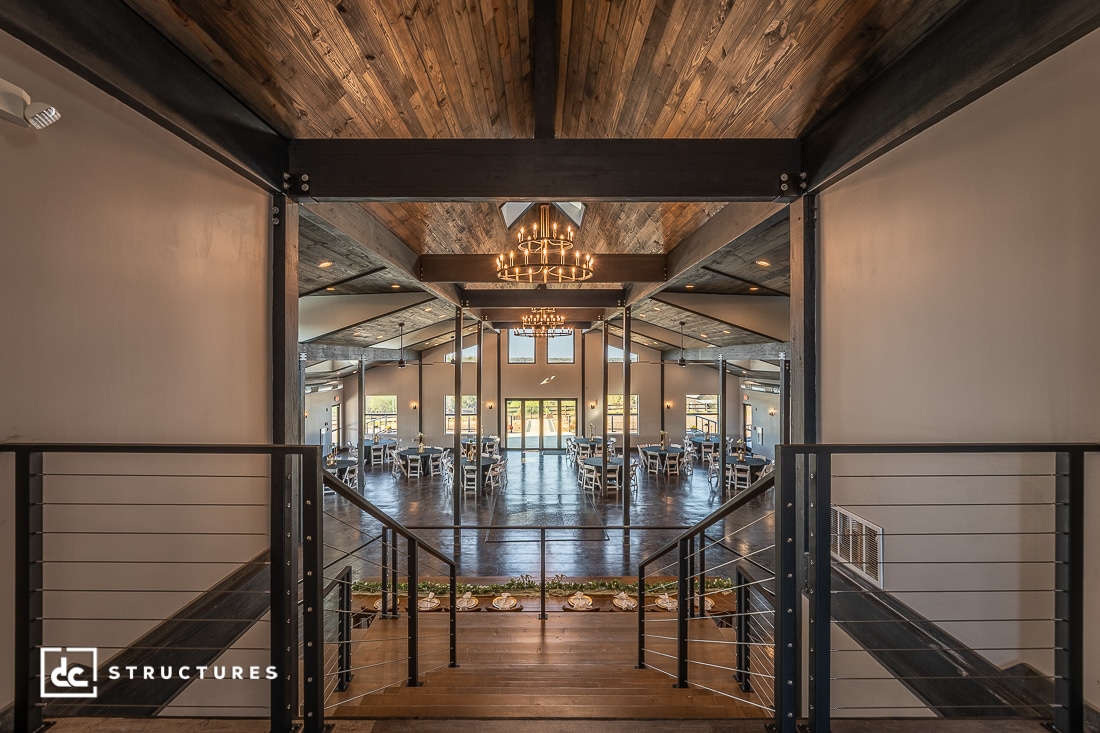
Inside, the grand ceremony hall is everything a couple could hope for. Vaulted ceilings, exposed timbers, dramatic window walls, and three large windowed cupolas let natural light pour in overhead, while tongue-and-groove cladding and oversized chandeliers wrap the space in warmth. Upstairs, a private bridal suite offers the bride and her closest friends a comfortable lounge and vanity area just steps away from the aisle.
A prep kitchen, ADA-compliant restrooms, and thoughtful storage round out a venue that’s as functional as it is beautiful.
A Process That Delivered
During the building process, Jon and Karen were provided with a pre-cut, drilled, and labeled framing kit, as well as an iPad loaded with visual tools to help them walk through each step of the assembly process. When issues came up, the team responded fast.
“When we identified something that needed to be addressed, they addressed it very quickly,“ Karen said. “I would definitely recommend DC to other folks looking to do the same.”
Hidden Vista Ranch is proof that a dream venue doesn’t have to stay a dream. With the right kit and the right team behind it, it can become the backdrop for hundreds of love stories for years to come.
See the full project description and gallery page for Hidden Vista Ranch here!
Ready to build your own event space?
Give us a call at (888) 975-2057 or request a free quote here!
Designing a structure that performs well in one climate is challenging enough; designing one that works across vastly different regions, from humid coastal environments to high-elevation mountain towns, requires a completely different level of planning.
That’s where thoughtful, regionally responsive design comes in.
Our Oakridge Apartment Barn Kit has been adapted for countless projects across the United States, each shaped by its climate, environment, and intended use. Below, we break down five real-world Oakridge projects and how each one was tailored to perform in its specific setting.
Nashville, Tennessee
Climate: Humid subtropical (hot, humid summers; mild winters; frequent rainfall)
Highlights: Covered outdoor living areas | Large glass doors & window walls | Column removal
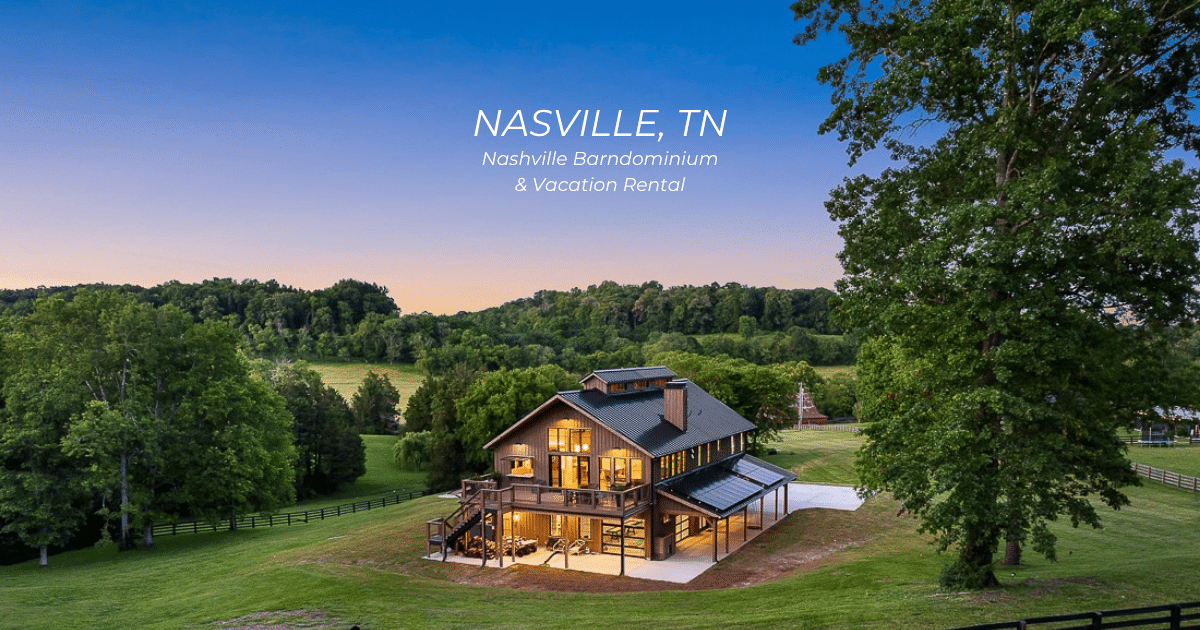
Located in a humid subtropical climate, this 6,449 sq. ft. Oakridge 60′ project near Nashville, Tennessee, required design choices that support moisture management, airflow, and year-round usability.
The expansive covered outdoor living areas—wrapping two sides of the structure—aren’t just aesthetically beautiful; they provide shaded, ventilated space that helps reduce solar heat gain while creating comfortable outdoor zones in a region known for its hot, humid summers.
Large aluminum glass garage doors and window walls were incorporated to increase natural light while promoting airflow throughout the main level. This is particularly beneficial in humid environments, where ventilation plays a key role in maintaining indoor comfort and preventing moisture buildup.
On the structural side, the column removal engineering upgrade created an open garage and recreation space, offering flexibility ideal for a hot rental market like Nashville.
Bradley, California
Climate: Hot Mediterranean/dry heat (hot, dry summers; mild, wetter winters; wildfire-prone)
Highlights: WUI fire upgrade | Woodtone fiber cement siding | Upgraded windows | Large shed roof & covered deck
In Central California, climate considerations shift dramatically. This 6,065 sq. ft. Oakridge 60′ project sits in a region characterized by hot, dry summers and increasing wildfire risk. That’s why this structure includes a WUI (Wildland-Urban Interface) fire upgrade, a critical feature in fire-prone areas.
Material choices also reflect the climate. Woodtone fiber cement siding offers enhanced durability and fire resistance compared to traditional wood siding, while Pella Lifestyle windows improve thermal performance and help regulate indoor temperatures during extreme heat.
The large shed roof and covered deck addition provide shaded outdoor space, reducing direct sun exposure and helping maintain cooler interior conditions. Combined with pre-staining services, these upgrades also protect exterior materials from UV degradation, which is a common issue in high-heat environments.
Kamas, Utah
Climate: Mountain/alpine (cold winters, heavy snowfall, high elevation, large temperature swings)
Highlights: Heavy timber roof upgrade | Extended shed roofs | Covered paddock
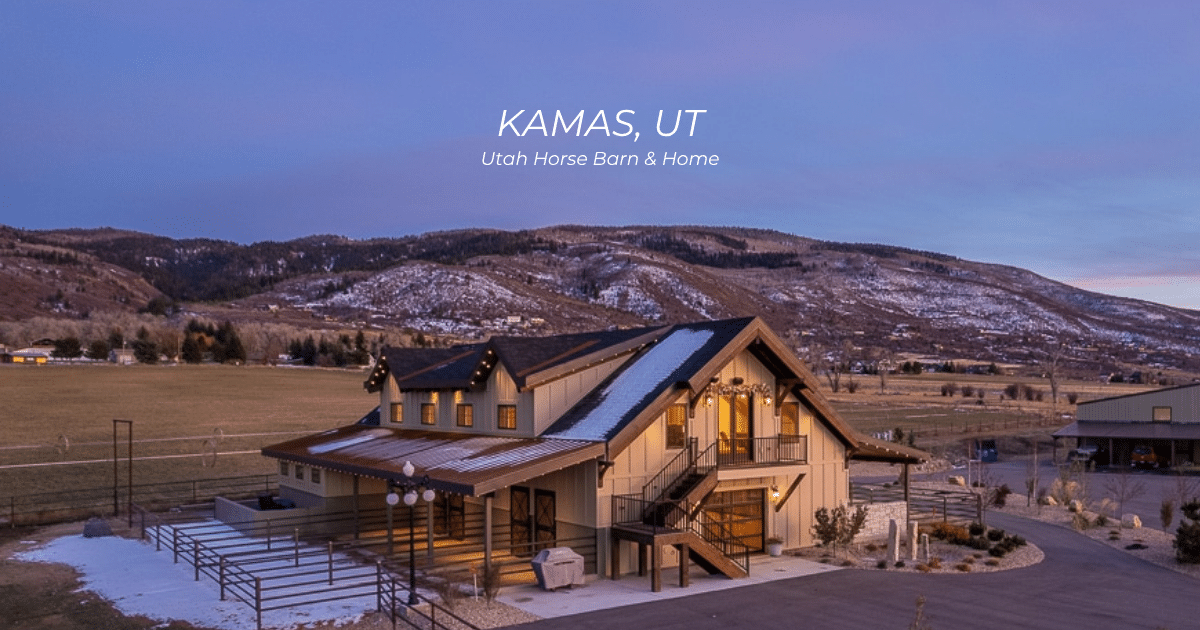
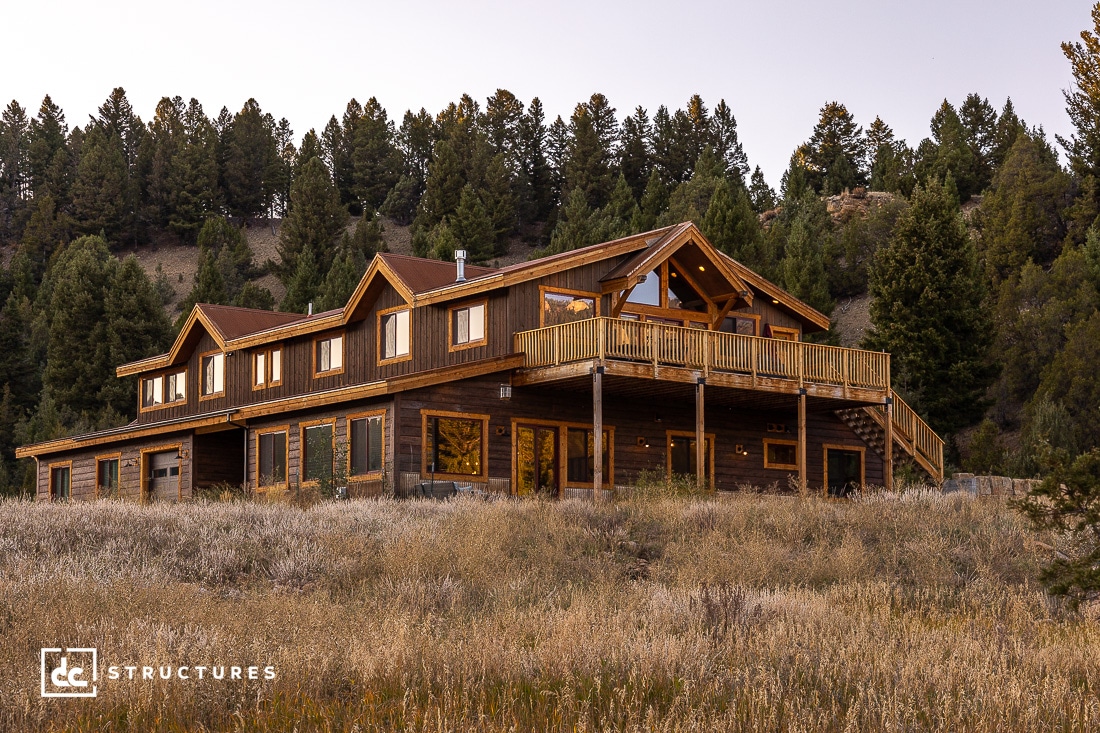
At high elevations in Utah, snow load and temperature swings become primary design drivers. This 6,922 sq. ft. Oakridge 74′ structure at Red Arrow Ranch was designed to handle heavy snowfall while supporting equestrian use.
In mountain regions like Kamas, snow loads can exceed 80–100 pounds per square foot, depending on elevation, so it was essential to include a heavy timber roof upgrade. This upgrade enhances the barn’s structural integrity, allowing it to support significant snow accumulation.
Additionally, extended shed roofs and covered paddocks serve a dual purpose: they provide shelter for horses while also managing snow shedding and accumulation around the structure. These features help protect both the animals and the building itself during the winter months.
St. Simons, Georgia
Climate: Coastal humid subtropical (high humidity, salt air exposure, heavy rain, storm potential)
Highlights: Hardie® siding | Vented cupolas, skylights, & windows | Covered turnouts
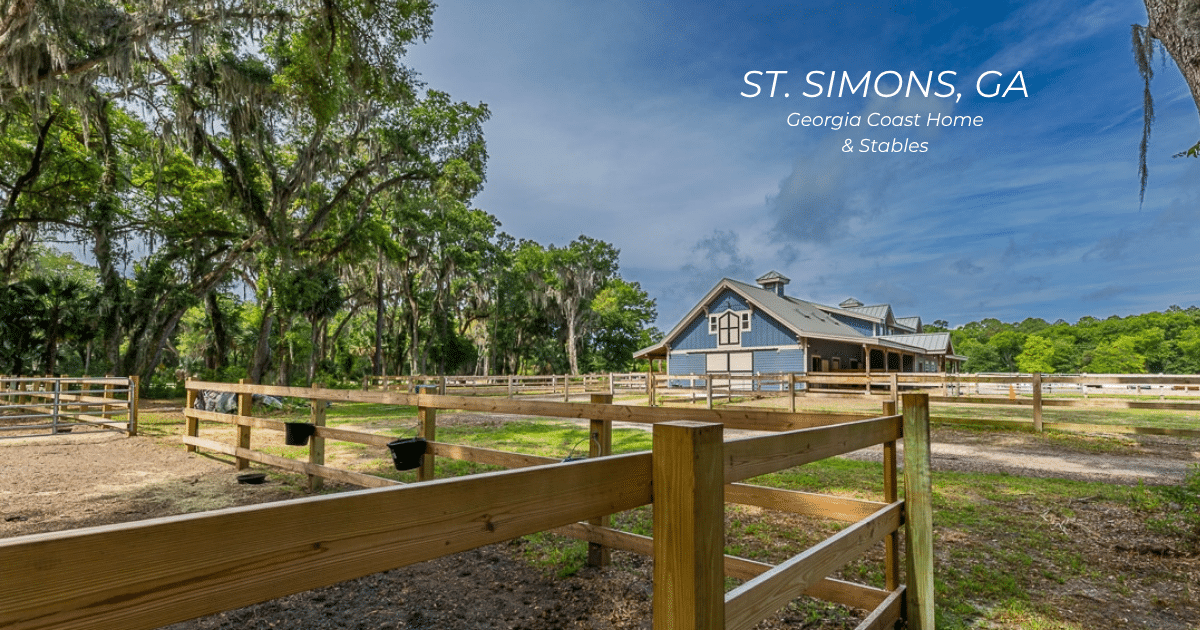
Coastal environments present a unique set of challenges, including high humidity, salt exposure, and the potential for severe storms.
Ventilation also plays a major role in this design. Vented cupolas, skylights, and strategically placed windows improve airflow throughout both the barn and living spaces, helping to regulate temperature and reduce moisture buildup. Covered turnouts, Dutch doors, and overhangs further protect the structure and animals from heavy rain while maintaining usability throughout the seasons.
Tetonia, Idaho
Climate: Snowy mountain valley (long, cold winters, heavy snow, dry air, strong seasonal variation)
Highlights: Snow load engineering upgrade | Wrap-around shed roof | Pella Lifestyle windows
In Tetonia, Idaho, long winters and heavy snowfall demand a structure that can handle extreme conditions while remaining highly functional.
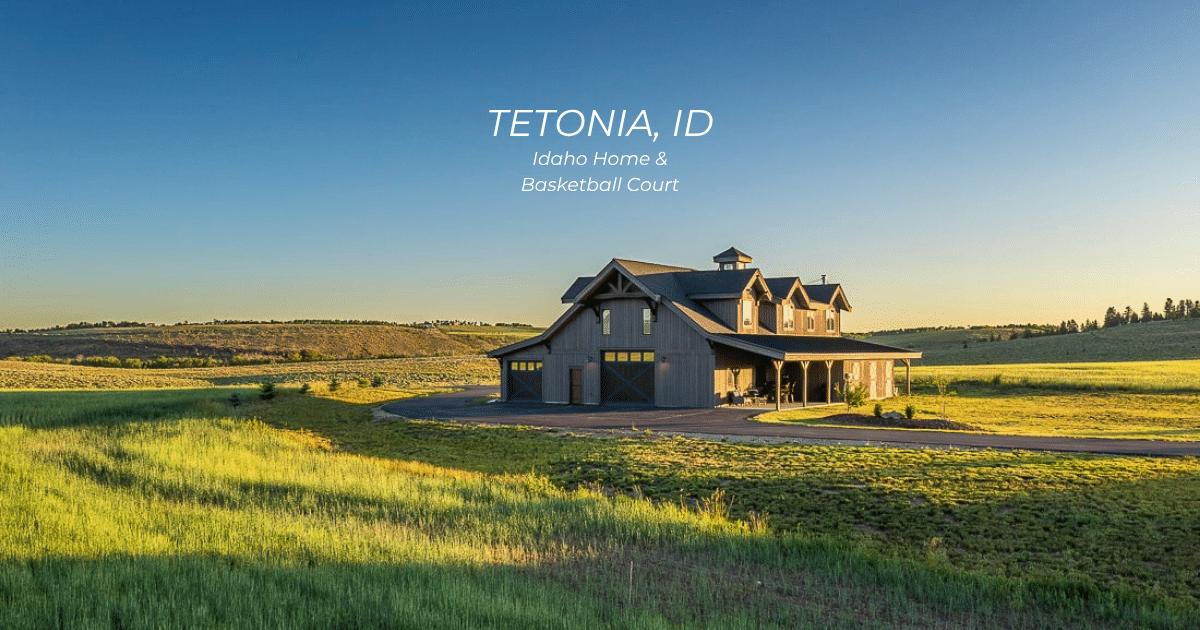
This 5,544 sq. ft. Oakridge 60′ project includes a snow load engineering upgrade, ensuring the building can safely withstand significant snow accumulation common in the region.
While the wrap-around shed roof is beautiful, it actually serves as another climate-responsive feature: It’s designed to help direct snow away from key access points and provide covered space for movement and storage during winter months.
Inside, the design prioritizes versatility. With a basketball court, horse barn, and residential living space all under one roof, the structure needed to support year-round use, even during harsh weather. Features like highly efficient Pella Lifestyle windows were chosen to improve insulation and energy efficiency, playing a crucial role in maintaining comfortable indoor temperatures despite cold outdoor conditions.
Why Climate-Responsive Design Matters
Across all five projects, one thing remains consistent: no two Oakridge Apartment Barn Kits are exactly alike.
The versatility of the Oakridge Apartment Barn Kit lies in its ability to evolve. By holistically combining thoughtful engineering with regionally appropriate materials and design strategies, we create structures that don’t just look good—they perform, wherever they’re built.
Ready to get started on your Oakridge project? Give us a call at (888) 975-2057 or request a free quote here!
The real estate market is an ever-changing, ever-evolving entity. In 2020, who could have predicted that a global pandemic would spur a historic rise in home sales? And this year, in 2026, we’re already seeing that single-family home sales may not be on the rise after all—it might just be something else entirely.
Multi-family dwellings—particularly duplexes, but also triplexes, fourplexes, and cottage clusters—are quietly becoming some of the hottest real estate investments across the country. Designed with many of the comforts of a traditional single-family home, these properties offer a welcome alternative to the status quo: a home you can make your own, with one, two, or even three additional homes attached.
Developers and real estate investors across the country are responding to a growing nationwide need for affordable housing alternatives. Considering the average salary needed to buy a home nowadays is nearly $120,000, many young professionals who are being priced out of houses in their area are turning in droves to condos, townhomes, and apartments that can meet their family planning needs.
This is where multi-family dwellings—like duplexes, triplexes, and fourplexes—come in handy. By investing in these types of structures, you can create a comfortable home for you or your family members while renting out the extra units. Or, you can use the opportunity to begin growing your real estate portfolio!
In any case, we’re here to help you determine the right path for your real estate purchase: will you choose the private oasis, free of shared walls, or a multi-unit development with strong potential for long-term financial gain? Let’s find out what makes the most sense for you and your goals.
Feature
Single-Family Home
Multi-Family Home
Privacy
High: No Shared Walls
Moderate: Shared Walls Between Units
Rental Income
Limited: ADU or Room Rental
Strong Income Potential from Additional Units
Maintenance
Fully the Homeowner’s Responsibility
Shared Across Units but Managed by Owner
Investment Return
Primarily Appreciation
Appreciation + Rental Cash Flow
Best For
Families seeking privacy and space
Investors or Multigenerational Living
What Makes a Single-Family Home a Great Investment?
Single-family homes are the quintessential American dream. Imagine a beautiful home landscaped to your style in a neighborhood designed for community, outdoor fun for kids, and privacy. That’s the ideal for millions of buyers searching for a home to make their own—for themselves, their family, and anyone they plan on hosting throughout the years.
While pricey in popular real estate markets like Southern and Northern California, Seattle, New York, and Washington D.C., single-family homes offer the ultimate privacy. With no shared walls, spacious backyards you can fill with your favorite plants, and total flexibility for your household, these homes provide a level of independence many buyers value.
Single-family homes are also an ideal fit for large or growing families and are, nine times out of ten, easier to resell in traditional housing markets. Annual home appreciation averages around 3% to 5%, making them a reliable long-term investment.
Not to mention, they often come with enough outdoor space to add an ADU. This makes them a great option for buyers looking to generate passive income through long-term tenancy while still maintaining the privacy of a stand-alone home.
Considerations for Buying a Single-Family Home
Outside of their obvious benefits, single-family homes also come with a few compromises that might not suit the needs of every home buyer.
In exchange for privacy, appreciation potential, and generous outdoor living space, single-family homes often require a significant upfront purchase price. The average down payment for a home in the U.S. is roughly $62,000, or about 16% of the median purchase price. To put that into perspective, that amount is roughly equal to the average national salary, which currently sits slightly higher at $63,795.
For many buyers, a single-family home is simply out of reach financially. Mortgage payments, property taxes, and HOA fees (if applicable) all play a role in your monthly expenses.
That’s not even taking into account that all maintenance costs fall squarely on the shoulders of the homeowner—and those can be expensive depending on the job. For instance, the average cost of installing a new fence typically falls between $6,000 and $9,000, while something more foundational, like a roof replacement, can cost anywhere from $5,800 to $46,000.
If that made you and your bank account say “ouch,” you’re not alone. It’s one of the reasons many buyers are turning toward multi-family units instead—either as renters or buyers—especially as home values continue to climb and many professionals find themselves priced out of traditional single-family investments in their area.
What Makes a Multi-Family Home a Great Investment?
Multi-family homes have been quietly—and sometimes not so quietly—dominating the urban and suburban housing market over the last several years. From duplexes and triplexes to entire condominium and townhouse communities, these structures offer a more affordable alternative to renting or buying single-family homes while sharing many of the same benefits.
For instance, multi-family homes may share walls with neighbors, but they often include two- to three-bedroom floor plans that make them perfect for small families and high-earning professionals alike. Because they typically cost less than single-family homes, they can also come with lower down payments and mortgage payments, making them easier to manage month-to-month.
These homes are not just becoming a beacon of possibility for serious buyers on a budget—they’re also one of the most common rental options for tenants seeking long-term accommodations that meet their financial, family planning, and multigenerational needs.
This makes developing a multi-family dwelling an incredibly compelling investment opportunity in urban and suburban markets throughout the country.
As more professionals turn to alternative housing options for their home purchase or long-term rental selection, multi-family homes can offer significant financial potential for those who can afford the upfront cost.
Whether you’re looking to live in one unit yourself, house aging parents or adult children, or expand your real estate portfolio, investing in a multi-family development can provide long-term financial opportunity while helping address the growing demand for affordable housing.
Considerations for Buying a Multi-Family Home
In today’s housing landscape, multi-family home investments offer relatively few downsides for those willing to take on the role of landlord or developer.
If you’re renting units out, you’ll likely be responsible for managing maintenance costs, finding tenants, and collecting rent each month. However, many investors choose to hire a property management company or financial manager to oversee tenant relations, maintenance scheduling, and rent collection—making the process far more manageable.
Let’s take a hypothetical example. Say you’re planning to build a duplex in Denver, Colorado, and the total cost comes in around $1,100,000—toward the higher end of the average duplex cost in the U.S.
Property taxes might sit around $5,786 annually, homeowner insurance could run between $500 and $700 per month, and your monthly mortgage payment for a 30-year loan might land around $6,500 with a 16% down payment. Taken together, you’re looking at roughly $90,000 per year in ownership costs during the first 30 years, excluding maintenance.
Now consider the average rent in Denver, which sits around $1,955 per month depending on location, square footage, and amenities.
If you rent both units of your duplex for around $2,000 each, that generates roughly $48,000 per year in rental income. That alone could cut your yearly housing costs by more than half compared to purchasing a similarly priced single-family home.
And if you look at larger multi-family properties—such as fourplexes—your potential income could increase significantly.
For buyers focused on rental income and long-term portfolio growth, multi-family properties can often provide stronger financial upside than single-family homes.
The Verdict
Who Should Buy a Single-Family Home?
If you value absolute privacy—no shared walls with neighbors, no landlord responsibilities, and no tenants nearby—a single-family home may be the right residential investment for you.
Single-family homes can be an incredibly meaningful purchase for high-earning professionals and families of all sizes. They offer room to grow, flexibility for multigenerational living, and the freedom to design your home and property exactly the way you want.
The most common home type in the United States, single-family homes allow you to enjoy your desired square footage, yard space, and lifestyle without compromise.
Plus, homeowners always have the option of renting out a spare room or building an ADU in the backyard to help offset monthly mortgage payments, making this type of investment beneficial for both your family and potential tenants.
Who Should Buy a Multi-Family Home?
If your goal is to build wealth through supplementary income, a multi-family home like a duplex, triplex, or fourplex could be the perfect solution.
Despite shared walls and smaller footprints per unit, these properties are increasingly viewed as some of the most strategic real estate investments available today.
As the need for affordable housing options continues to grow across the country—with little slowdown in sight—multi-family homes built in high-demand regions like Los Angeles, Austin, and Nashville present a strong opportunity for investors.
Beyond the financial upside, multi-family homes also offer practical living solutions. You can live in one unit while renting out the others, provide housing for aging parents or adult children, or create a stable rental option for extended family members.
Making Your Decision
Whatever fits your life, family, and financial goals best, we’re here to support you!
At DC Structures, we’ve designed a wide range of residential buildings for clients across the country, including custom single-family homes and multi-family structures like modern duplexes designed for flexible living and long-term investment.
If you’re ready to explore the next step toward a new single-family home or a multi-family development, give us a call at (888) 975-2057 or request a free quote to start the conversation.
One look at our gallery is all it takes to fall in love with our prefab wood structures. Those of us who spend a great deal of time browsing through our projects know that all too well, and some of us who write the descriptions for said projects can say with confidence: our buildings are truly one-of-a-kind.
Either customized from one of dozens of pre-engineered building models (some of which combine a few!) or designed to fit a client concept, our structures demonstrate the immense creativity and skill it takes to turn a sketch on paper into a tangible, and dare we say, flawlessly executed build.
From signature barn homes to tasting rooms, equestrian estates, and more, we’ve crafted hundreds of unique buildings across North America, each tailored to the tastes, lifestyles, and needs of our clients. Take a look at some of the structures we’ve designed as schematic concepts and interior design documents, and helped bring to life in collaboration with our clients’ chosen builders:
Prineville RV Garage Home
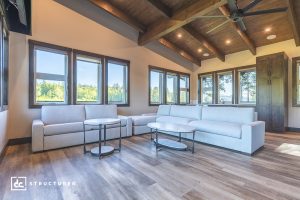
Designed by DC Structures and built by Jonsson Construction, this barn home blends classic charm and modern simplicity. Cozy features like tongue-and-groove ceilings, custom wood built-ins, and a centerpiece stone fireplace make this house a home, creating a distinctly inviting interior with clear rustic influences.
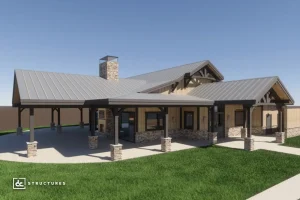
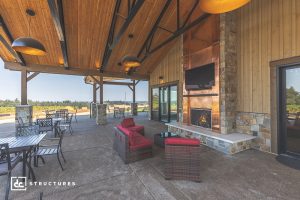
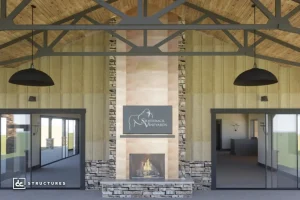
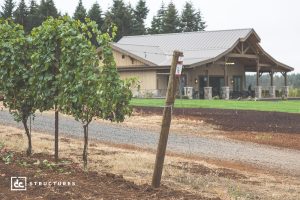
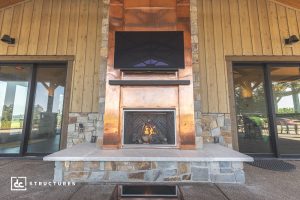
Located on a 600-acre farm in Silverton, Oregon, this tasting room features a warm and luxurious aesthetic complemented by exposed steel trusses, a copper-plated fireplace, and dome pendant lighting.
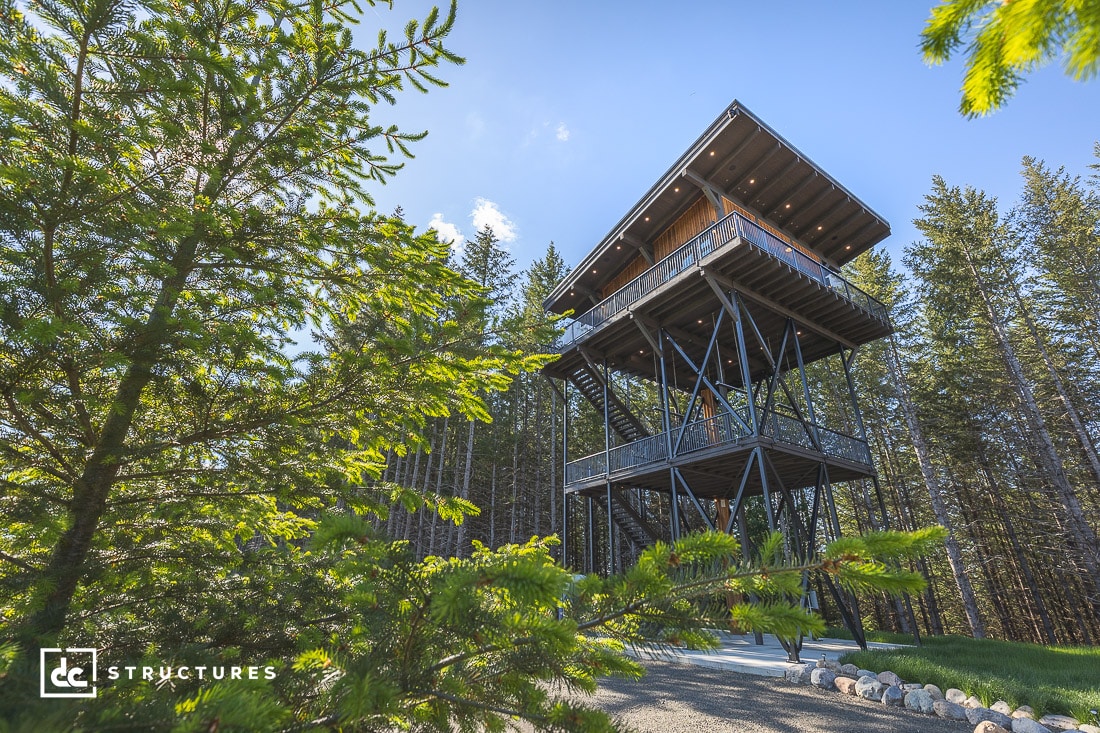
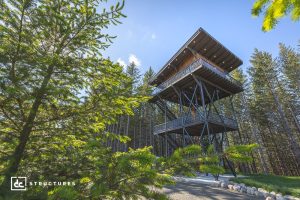
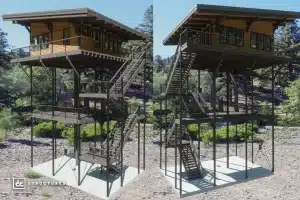
Standing at over 56 feet high, this custom lookout tower and treehouse in Sandy, Oregon, is one of four structures we designed for these clients. Its three-story design towers over the property, providing our clients with stunning, tree-lined views of nearby Mt. Hood National Forest.
Curious about our process? We’d love to bring you in on the magic behind the scenes! Call us today or visit our process page for more information on what we do, how we do it, and what sets us apart as a premier designer and producer of prefab wood buildings.
10% OFF
YEAR-END SALE
10% OFF Oakridge, Pineridge, & Shasta Models – now until Dec. 31st!
Our site uses cookies to provide the best website experience, please accept: