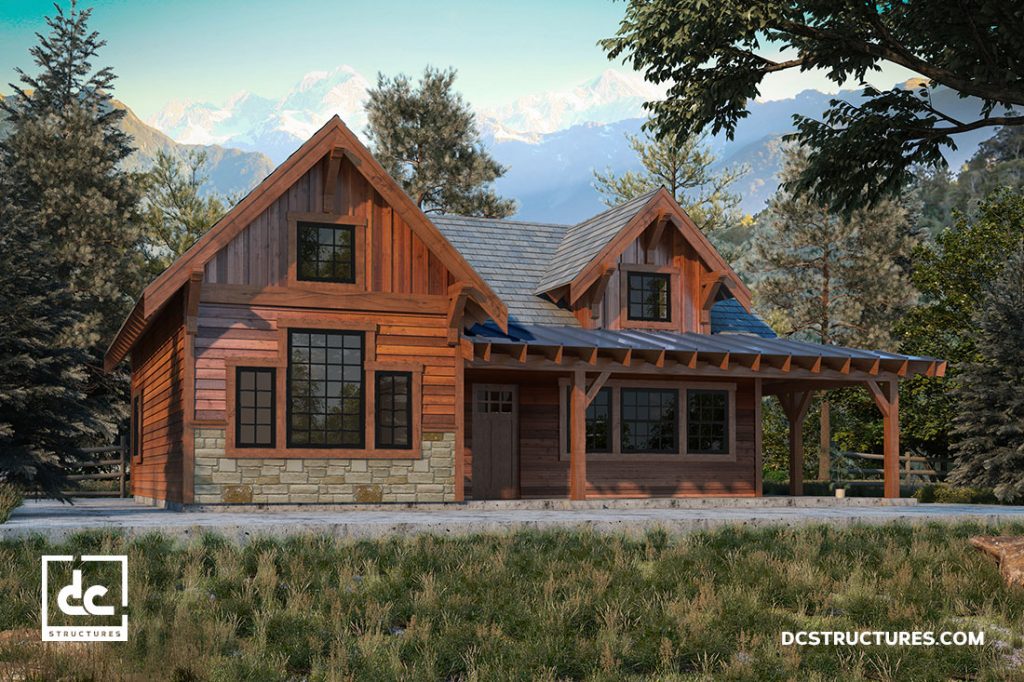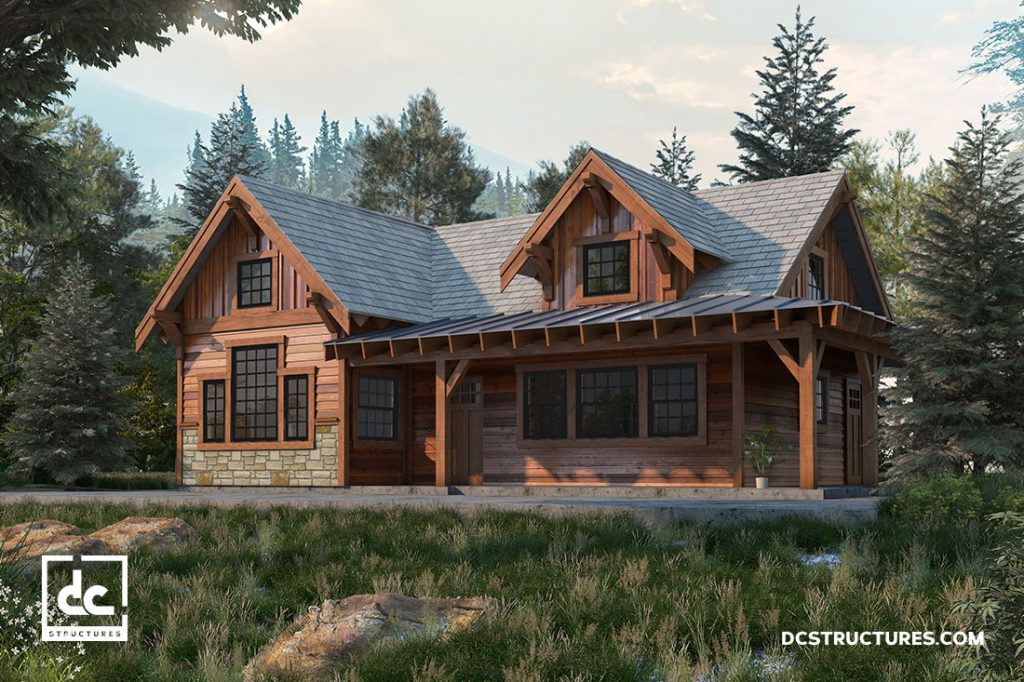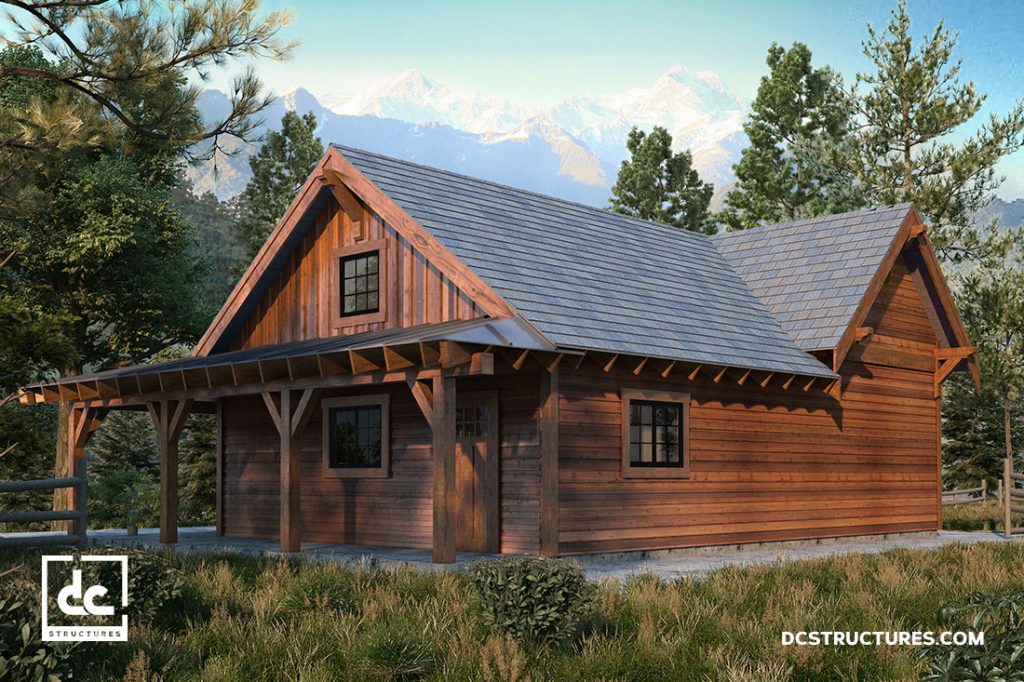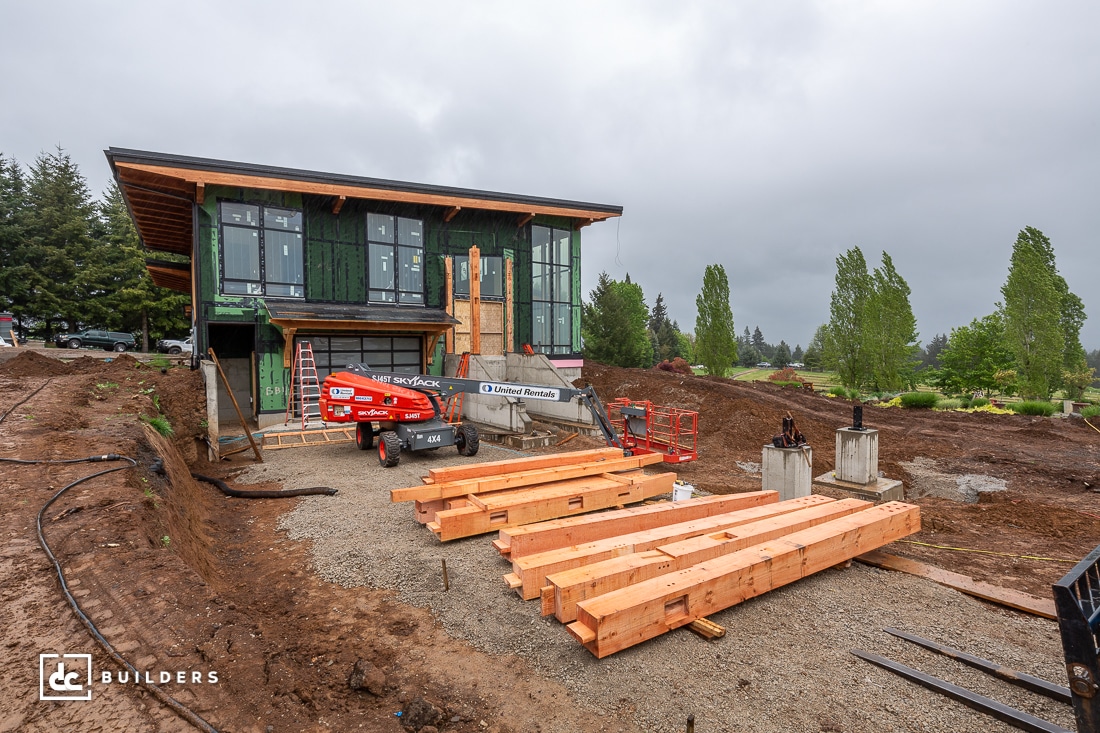
Not everyone dreams of living in a mansion. In fact, a growing number of Americans are investing in smaller homes for their property for a variety of reasons aside from the obvious cost factor.
One of the main catalysts driving what’s being called the “tiny home trend” is a shift in mindset from desiring a traditional family home to something more practical for your lifestyle. For instance, parents with kids in college might consider downsizing from their current home while eco-conscious homebuyers might be more inclined to live in a smaller home that requires fewer materials to build.
Whatever your reason may be for seeking a smaller structure for your property, we’re here to help you design a heavy timber building that perfectly suits your needs. Take a closer look at some of our smaller barn home and cabin kits under 1,000 sq. ft. to determine if our pre-engineered building models are just right for you.
The McKenzie Cabin Kit
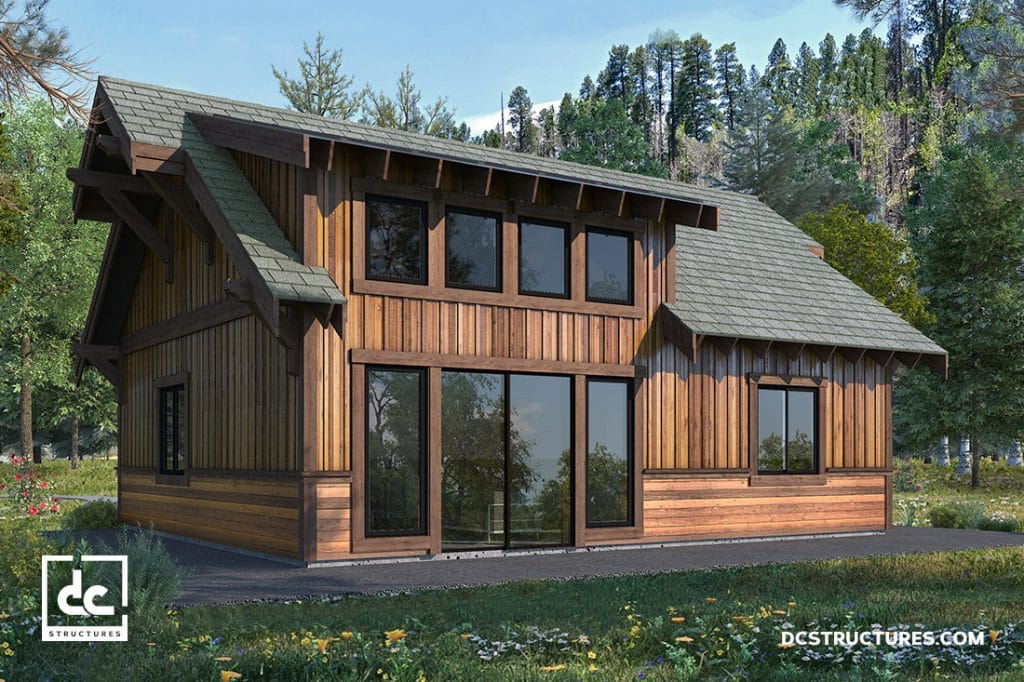
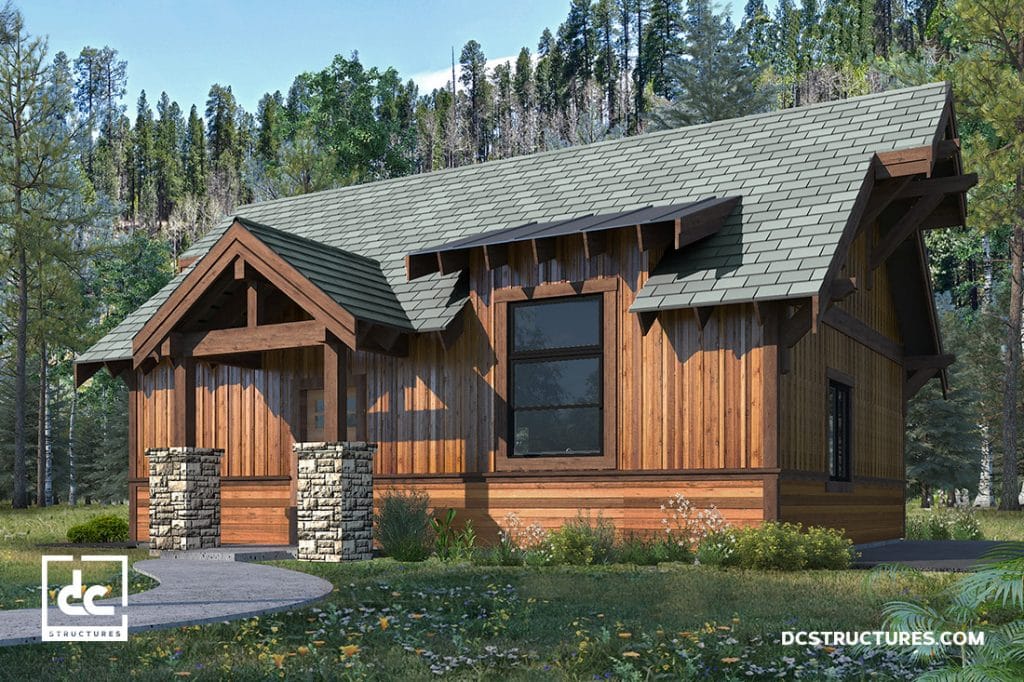
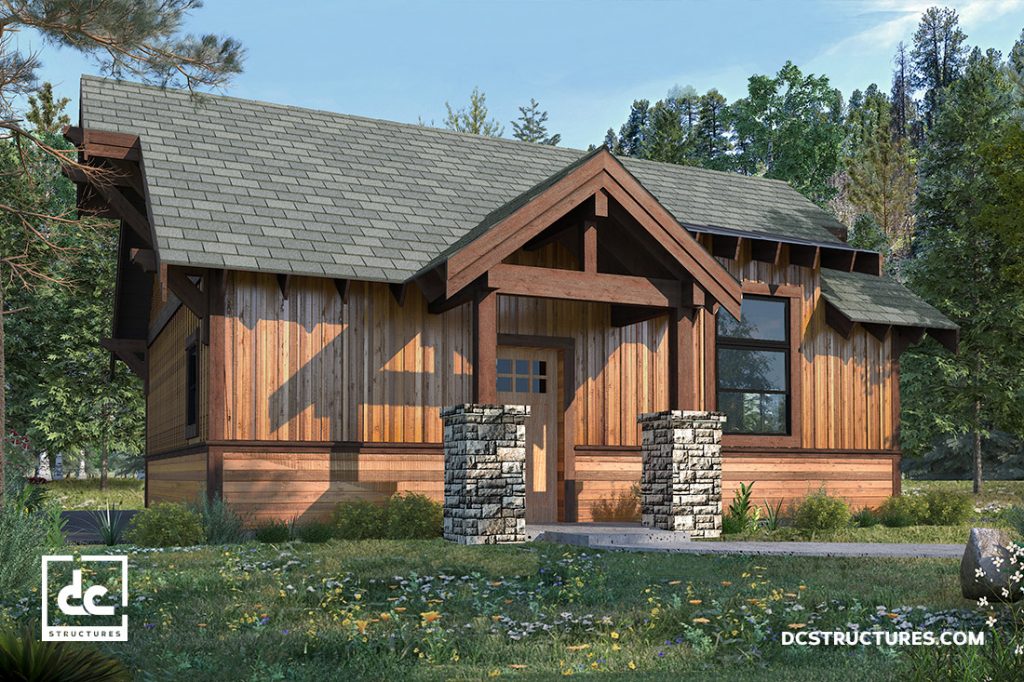
Coming in at 651 sq. ft., the McKenzie cabin kit is the smallest structure included in our line of prefabricated building kits, yet one of the best values. Ideal for couples or individuals, the McKenzie features a studio-style layout that you can easily customize to fit your lifestyle. Whether you’re looking for a full-time residence, guest house, or vacation property, this compact cabin kit is an excellent investment that will last you decades.
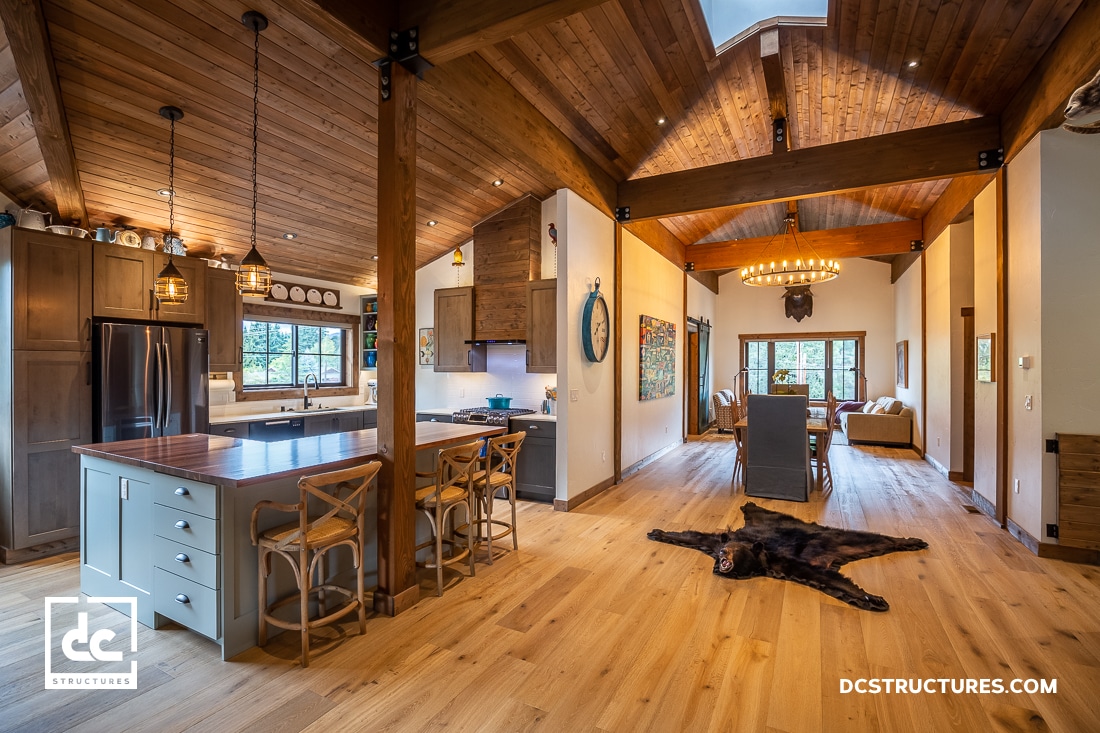
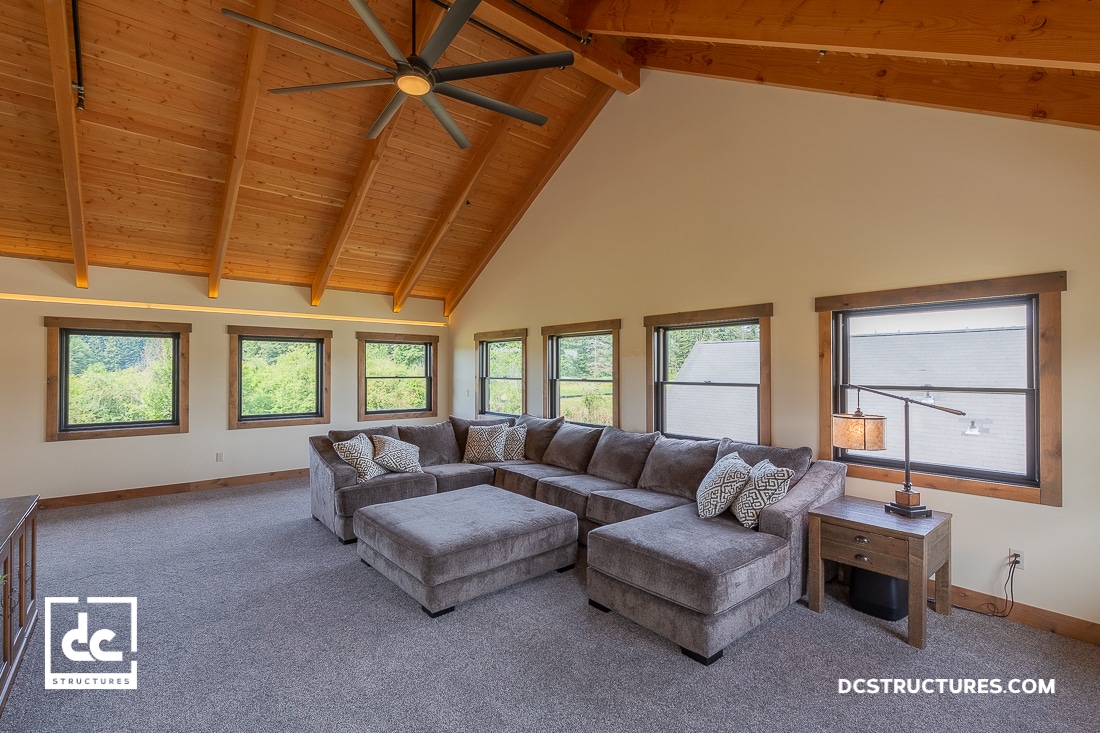
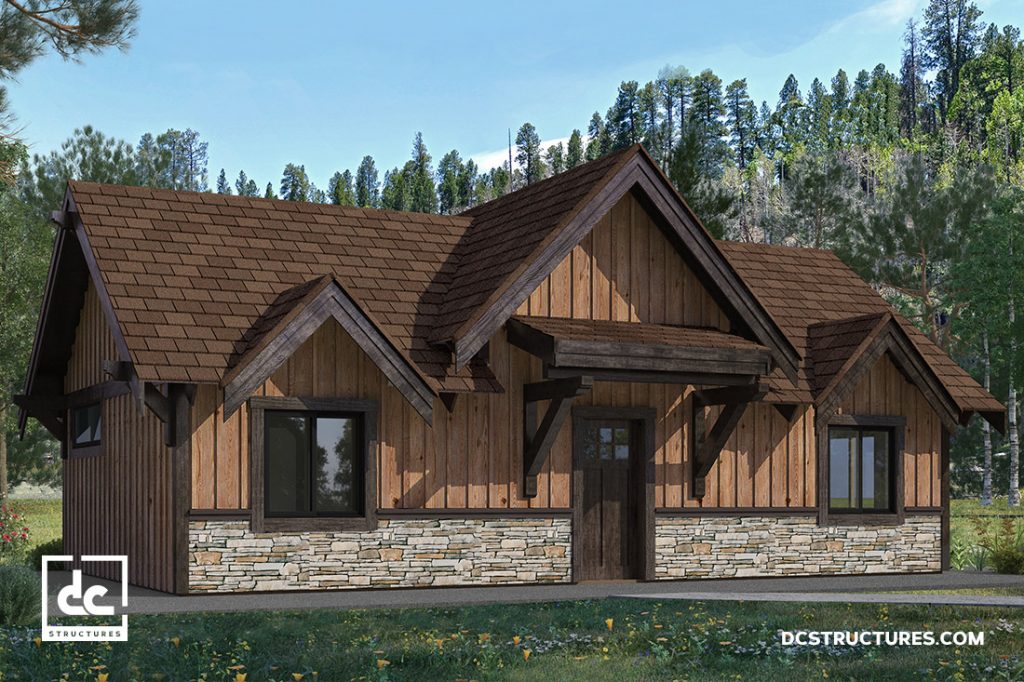
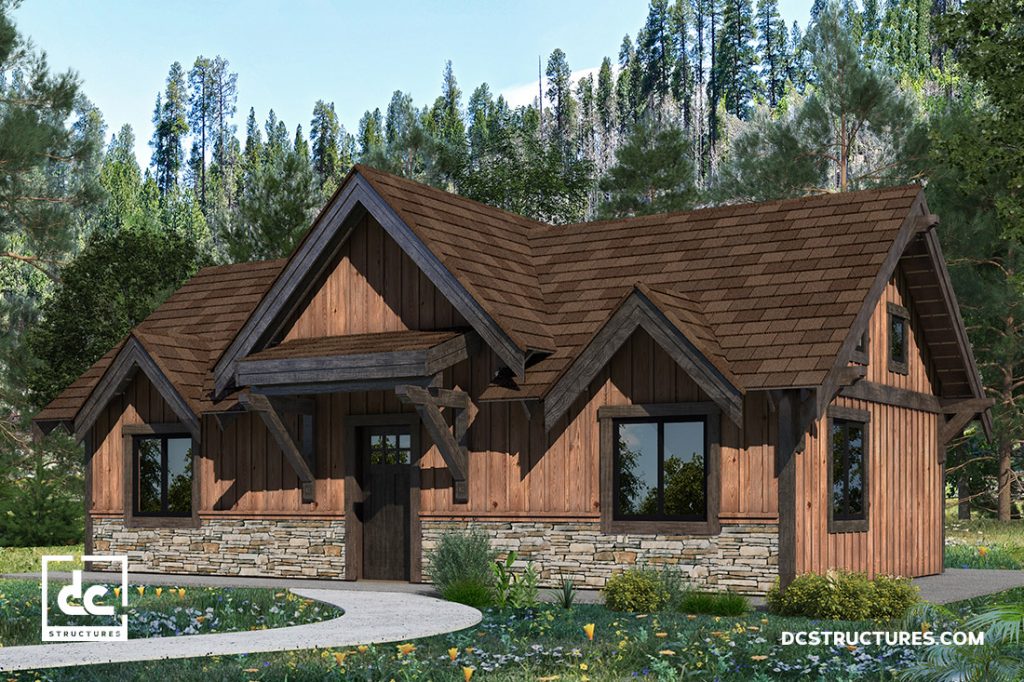
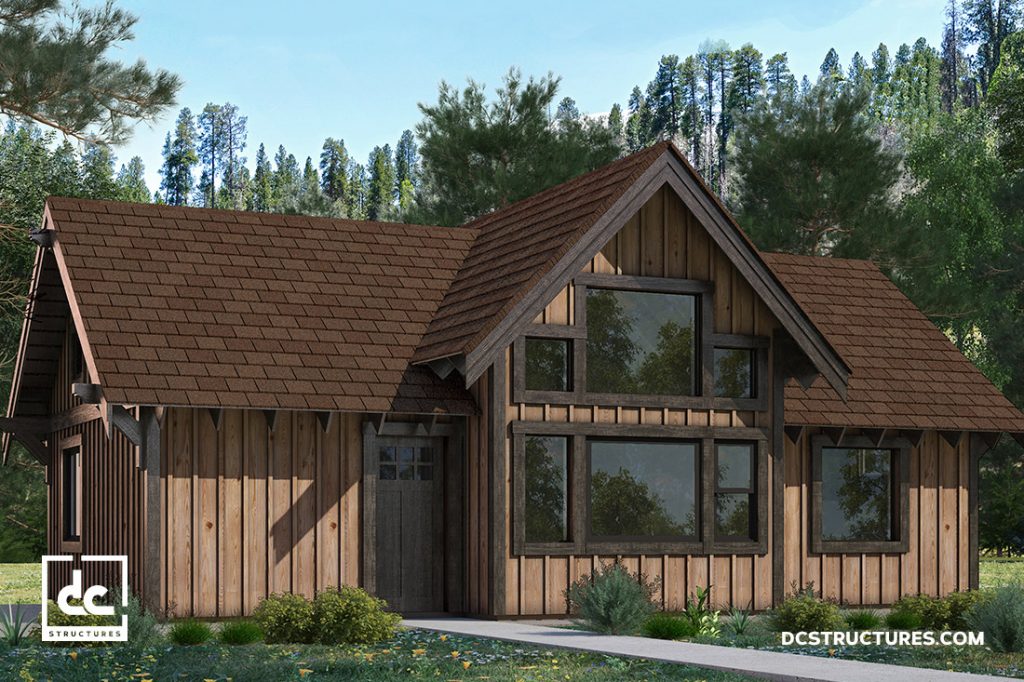
The Deschutes is a classic cabin design made from the finest Douglas fir posts and beams sourced from our mill-direct connections in the Pacific Northwest. This building model boasts 776 sq. ft. of modifiable space, with room for one bedroom and one bathroom. Designed in the method of post and beam construction, the interior features vaulted ceilings with exposed beams that give the illusion of added living space.
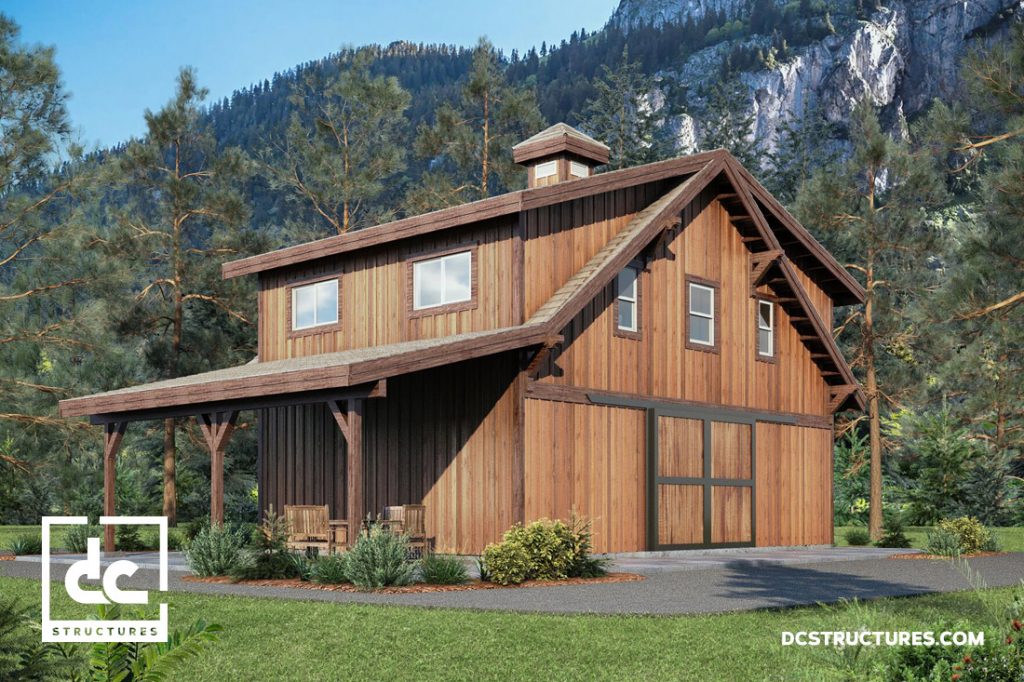
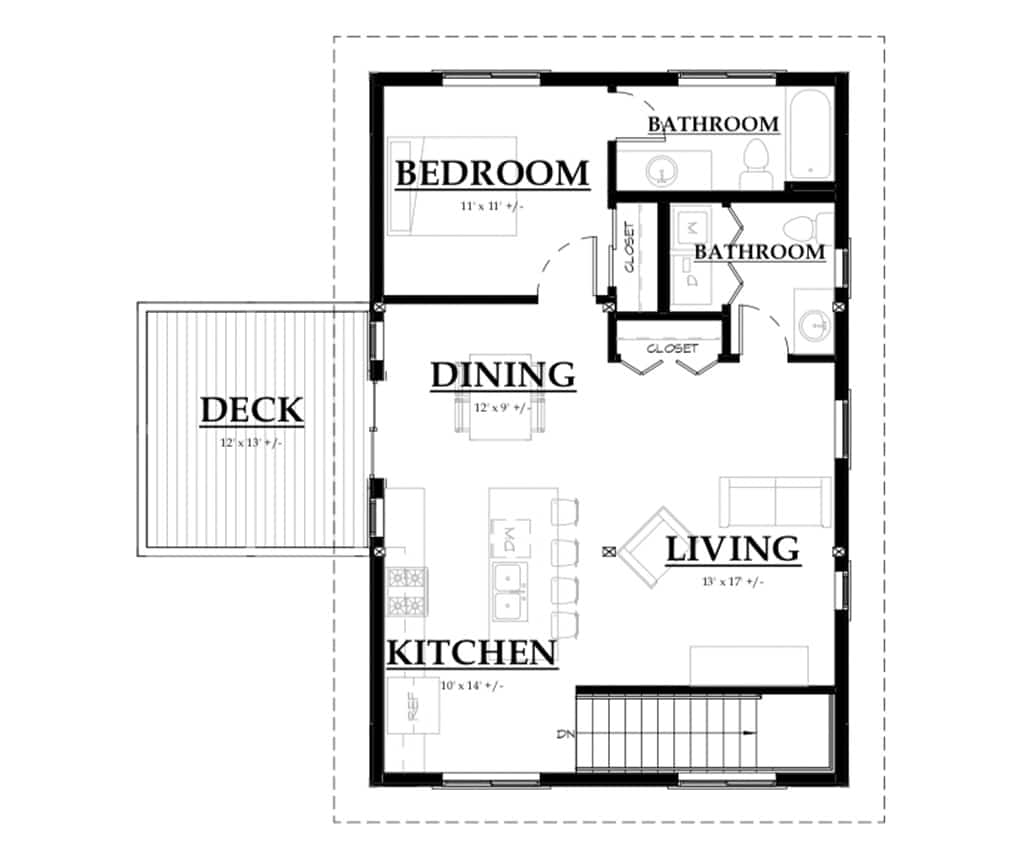
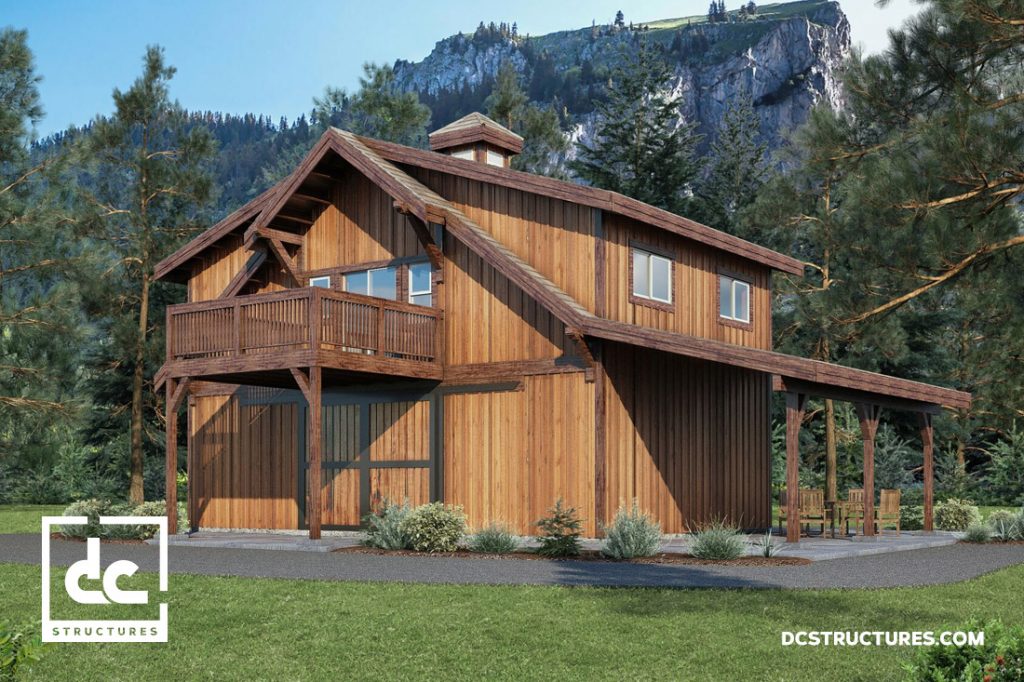
Considered to be our most popular apartment barn kit, the Oakridge is perfect for anyone seeking a multi-purpose residence with a reduced carbon footprint. With 864 sq. ft. of upstairs living space, you have the option of turning the main level of your Oakridge 24’ building model into a workshop, horse barn, garage for your vehicles and outdoor toys, or anything else you can imagine!
Learn more about the Oakridge 24’ by clicking here.
The Rogue Cabin Kit
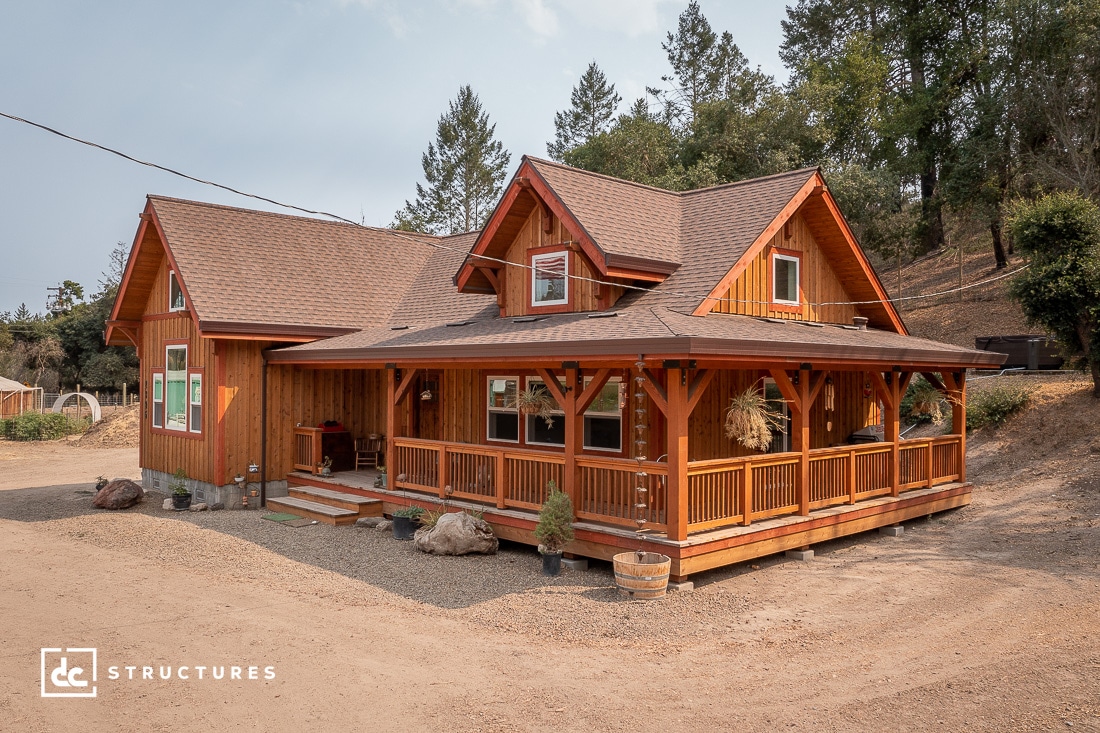
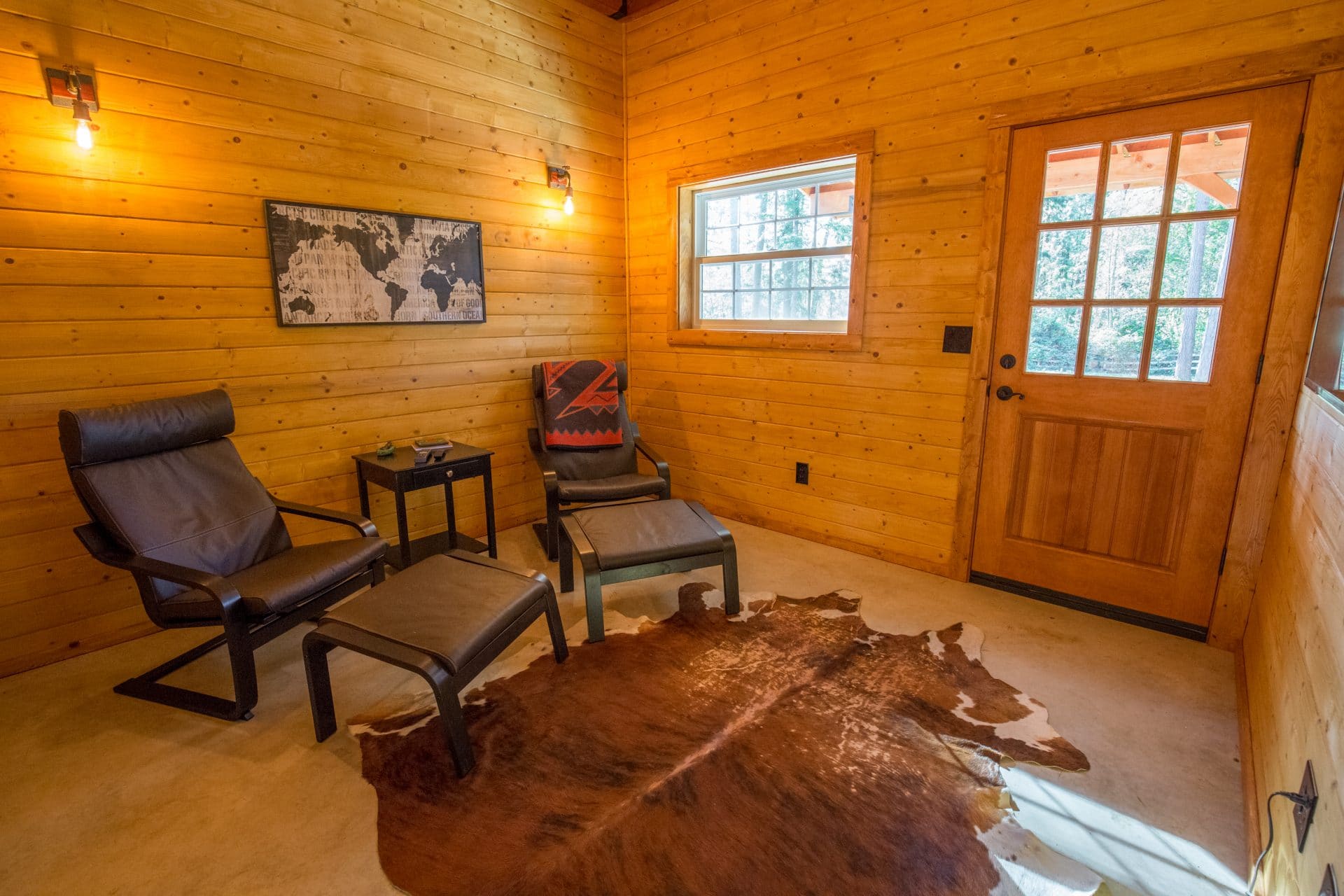
The Rogue cabin kit is a stunning cabin design that features a covered porch and spacious master suite. This popular cabin kit offers 948 sq. ft. of living space that can easily be converted into a two-bedroom residence. With its classic heavy timber exterior and wide-open layout, the Rogue makes an ideal structure for anyone seeking a rustic retreat to call home.
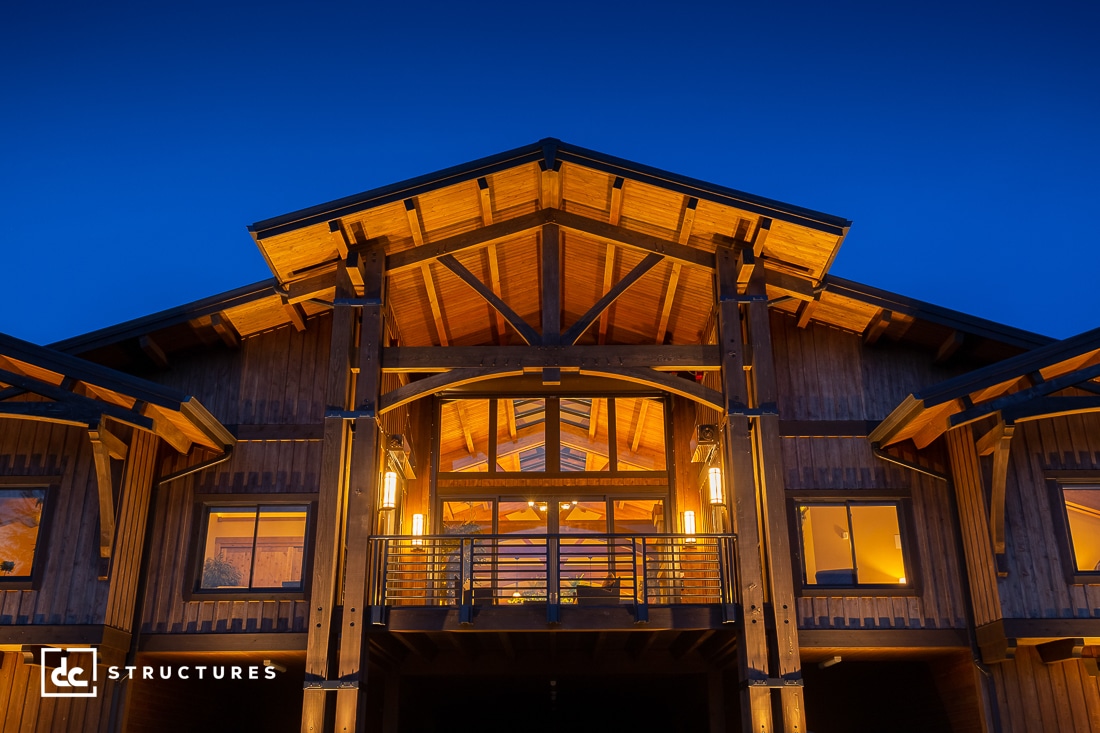
Lighting is one of the most important design aspects in any home, let alone a timber frame home. When done properly, a well-lit timber home showcases the beautiful exposed beams in your space while setting the mood for each room. Since timber homes feature a complex design unlike that of traditional homes, it’s important to pay attention to the type of lighting that best serves each room in your house and what function it will have. To help you make the most of your timber home investment, here are some tips on how to light your timber frame home in a way that best illuminates the beauty of its all-wood design.
Determine the Best Lighting for Every Room
Every room in your home has a unique function, which means the type of lighting you decide to include in each space should serve a purpose in line with the intended use of that area. Your bedroom, for instance, will have vastly different lighting than your kitchen. For task-oriented rooms like your kitchen or office, we recommend using hanging light fixtures, otherwise known as pendant lighting, to brighten the space. Track lighting can also be extremely helpful, as it gives you the ability to position the lighting over essential food prep areas like your kitchen island.
For rooms where you typically go to relax or rest, use ambient or yellow lighting to create a calming environment that brings out the stunning wood features in the space. If you’re unsure of what lighting to install in your great room, consider adding wrought-iron chandeliers to your living space, as well as wall sconces and recess lighting to highlight the heavy timber accents in your home.
Consider the Design of Your Interior
If you’re looking to design your home with contemporary flair, you’ll likely want to use more built-in lighting such as overhead cans, LED lights, and modern wall sconces. For a more traditional look, pendant lighting and stained-glass table lamps provide a sense of rustic comfort and make any room in a timber home feel like a luxurious mountain retreat.
Be Cognizant of the Placement of Your Lighting
Lighting needs to be strategically placed in order to best serve its function in your home. With this in mind, it’s important to pick out certain focal points in each room that you wish to highlight. For instance, installing lighting on either side of the mirror in your bathroom offers the best light for getting ready, while making the space feel elegant and cozy. Similarly, adding rustic chandeliers to rooms with vaulted ceilings draws attention to the center of the room and makes your living space look and feel more inviting.
Remember Lighting a Timber Home Requires Extra Effort
Because timber homes are designed with an exposed frame, lighting a timber home is a lot more complicated than lighting any traditional home. This is why it’s important to consult with lighting design experts who can give you the best idea of where to place your lighting and what lighting you’ll want to use based on your personal style and taste. Once finished, your lighting should look beautiful and showcase the best aspects of your timber home so it’s crucial to ensure you work with an expert that understands how to properly light your timber home in a way that best accentuates its unique features.
For more lighting recommendations, be sure to visit Timber Home Living for detailed descriptions of the best type of lighting to include in your timber home!
Oh, the joy of graduating from college just to move back in with your parents! Thanks to staggering student loan debt and a lack of affordable housing options, more millennials are living at home than any other generation in the past century. To put it into perspective, that’s one in five adults, or 22 percent of millennials. While parents with empty nest syndrome are rejoicing, others are impatiently awaiting the day they can have the house to themselves again. With a little compromise, both parties can work on making co-living a less miserable experience, and it all starts with creating personal space.
Benefits of Personal Space
Everyone likes their personal space, whether or not they say it outright. Not even best friends enjoy spending every minute of every day with each other without a break. Alone time is not only essential for our mental health, but it also helps us be more productive and well-rounded people. Some of the many benefits that come with setting aside alone time include a boost in creativity, lower stress and depression, and improved relationships.
Studies show that people work through complex problems better when they’re alone. Sometimes working in a group can influence us to unintentionally mimic opinions and creative processes other than our own, making it difficult to weed out whether an idea is ours or someone else’s. On that same note, taking time away from your partner and friends often strengthens these relationships. Our solitude allows us to center ourselves, which leads to more genuine connections with our loved ones. Lastly, alone time can replenish our energy and make us feel less depressed. It gives us the ability to get in tune with our own needs without focusing on the pressure and expectations surrounding us on a daily basis.
Create a Man or Lady Cave
Redesigning Your Basement, Attic, or Garage
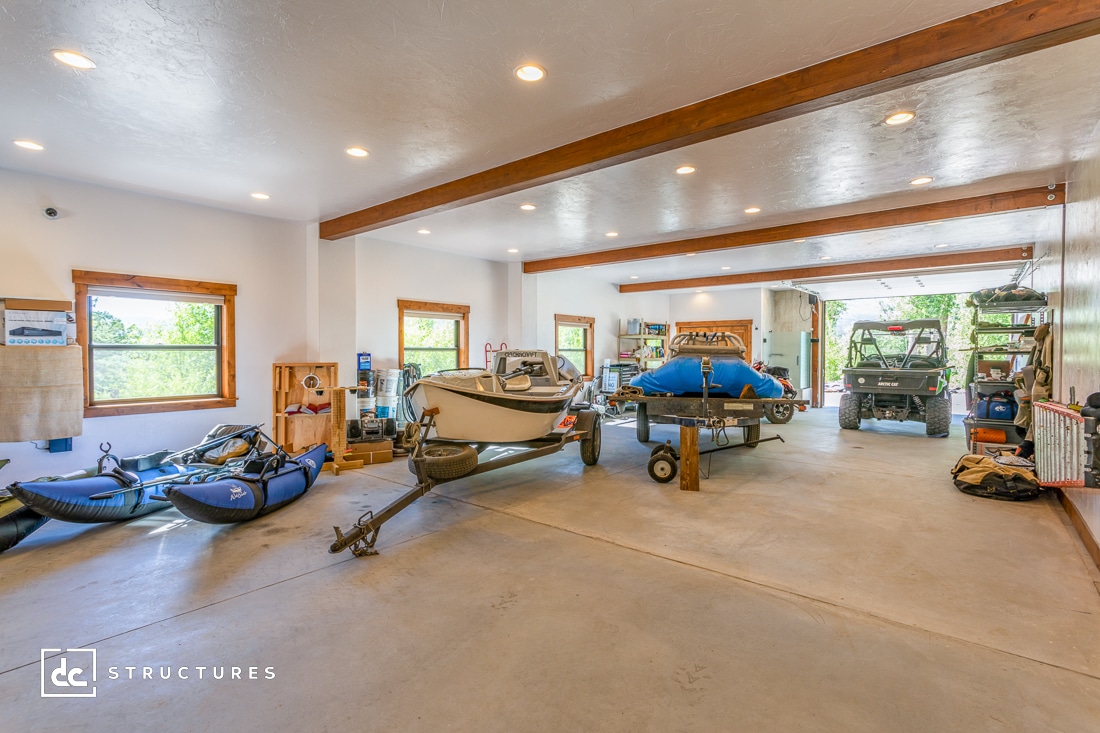
Basements, attics, and garages are commonly overlooked areas for those seeking solitude. This is mainly due to the fact that these spaces are typically filled to the brim with junk and memorabilia from the ’60s and ’70s. No need to chuck those Iron Butterfly records though! With some imagination and redesign, these areas of your home can make ideal getaways for anyone craving alone time.
While customizing an existing room to fit your hobbies isn’t always possible, you can always create a space for your cave. This can manifest in the form of an add-on room or even building a separate structure away from your main residence. Whatever your vision may be, it’s important to design a space that helps you de-stress and feel rejuvenated.
Crafting Your Cave
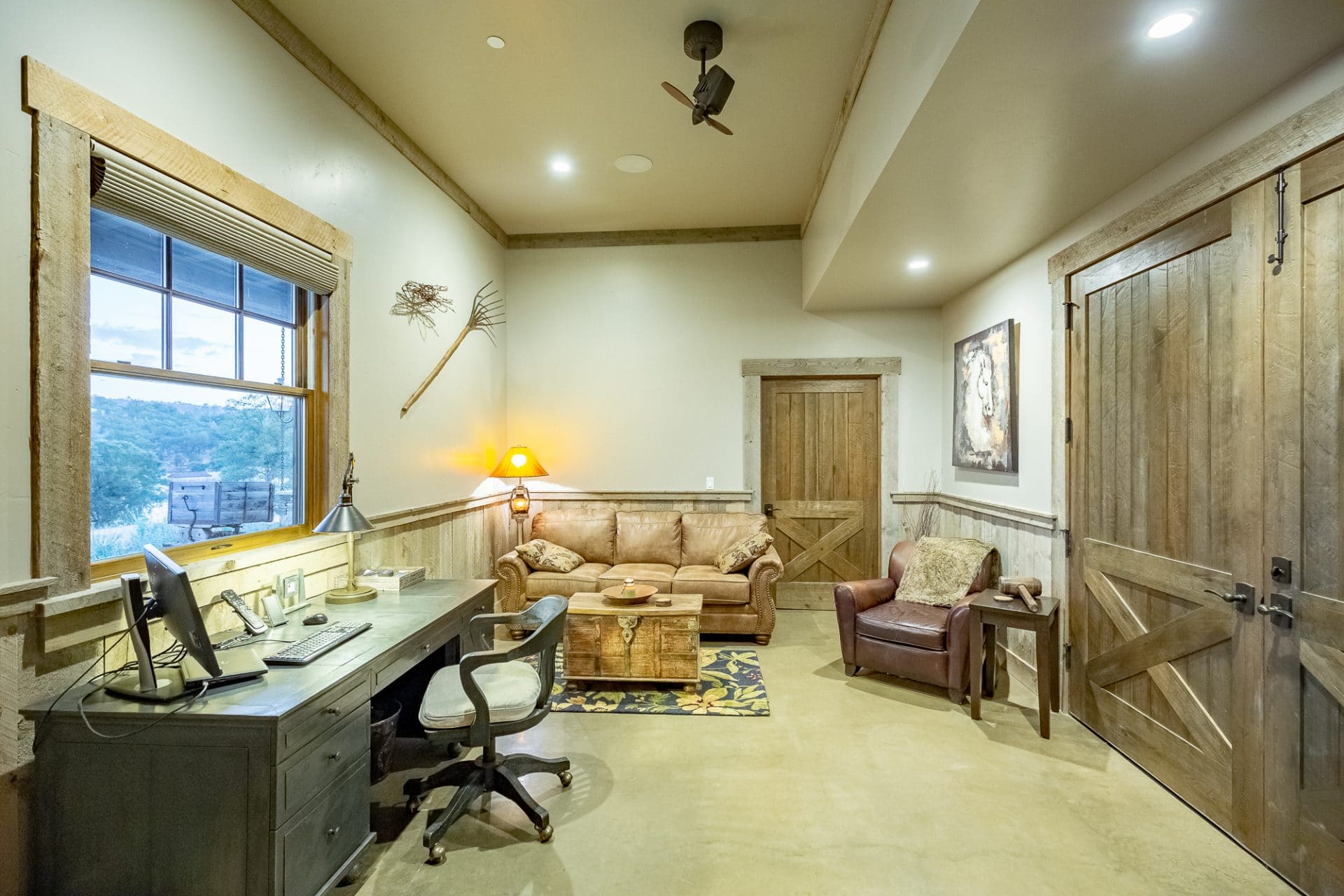
So we’ve all heard of the man cave, but what about a lady cave – a place for those hardworking women in our lives to relax and unwind? This could be a barn with an upstairs loft, a DIY music studio, or an attic-turned arts and crafts workshop. Regardless, a man cave or lady cave should be considered a sacred space and reflect the personal interests of its owner. If you don’t take the time to tailor your cave to your interests, it can feel like you haven’t totally escaped, so be sure to put some effort into making this space uniquely your own.
But if you do feel like sharing the space with the whole family, there are plenty of entertainment essentials that everyone can enjoy including ping pong ball, air hockey, and video games. For helpful tips on how to create a multi-functional space for the family, check out this article from lifestyle blog Fix that details all of the fun additions you can include in your cave.
Schedule in ‘You Time’
It’s easier said than done to keep to a personal schedule. Say you’re craving alone time, but someone else in your household needs undivided attention from you. While this can be a difficult situation to navigate, it’s important to set boundaries with those around you so you can schedule some much-needed TLC. Mental health experts recommend about 20 minutes of alone time a day, but it’s truly dependent on what you’re feeling and need to accomplish. There are plenty of ways to relax while spending time with others. However, it’s necessary to ensure you’re penciling in some time for yourself so you can feel your happiest and exemplify it in your everyday life.
Heating your home can be expensive, especially during the wintertime. While natural gas is the cheapest and most popular heat source for homes in the U.S., it can cost up to $1,024 to run for the entire season. That’s almost $350 a month toward heating bills alone. Winterizing a home helps homeowners save energy and money, while preventing unexpected damages from ruining holiday shopping plans. After all, there’s nothing worse than dealing with busted pipes and pest infestations while celebrating with family and friends. Here’s how you can winterize your home design to prepare for an enjoyable, cost-effective winter.
Do I Need to Winterize my Property?
The answer is yes, and it’s still yes if you live in Southern California or Hawaii. It’s always a good practice to prepare for the worst, even if that means occasional rain and temperature drops. That being said, it really comes down to the predicted climate for your area.
Consider the Temperature and Weather
Not all regions are the same. Winter on the east coast is nothing like winter on the west coast. Consider that preparing for months of heavy snow will look completely different than winterizing for 60 degree weather. Wooden cabins will most likely need to be winterized. Nonetheless, there are ways to winterize your home that are helpful to any homeowner, regardless of where they live in the states.
How to Winterize the Interior
There are dozens of ways to make sure your home stays cozy and warm in the winter aside from breaking out the blankets and sipping on hot cocoa. Below is a comprehensive list of tested methods for keeping heat in and cold out.
Heating Systems
As mentioned earlier, heating systems can cost a pretty penny over the winter season. While natural gas is the cheapest and most popular option for American homeowners, you can also heat your home using heating oil, propane, or electricity. These sources will drive up monthly costs quite a bit, but they do provide an easy fix.
Turning your water heater down to 110 degrees, as it saves you money by lowering the temperature. The Department of Energy estimates you can save $12 or $30 per year for every 10 degrees lowered.
Washing clothes in cold water so you can avoid starting up the water heater.
Installing a smart thermostat that allows you to set specific times for your furnace to run, which also saves energy.
Using compact fluorescent lightbulbs instead of incandescent bulbs. Compact fluorescent lightbulbs use 75 percent less energy on average and are said to last 10 times longer.
Switching to smart power strips that cut off energy wasted on unused devices like game systems and DVD players.
Investing in new appliances that can save you an estimated $75 per year. Outdated appliances are more prone to repairs and setbacks, which can end up costing you more money and energy in the long run.
Insulation
Insulation provides resistance to heat flow and reduces costs to expensive heating and cooling systems. However, it’s important to understand where to insulate for the best results possible. Here are some tips for where to add insulation for maximum effect:
Experts recommend adding insulation to the attic, crawl space, garage, and basement.
You can insulate your attic door by purchasing covers for the attic stairs or openings. These are easy to install and remove, and can help you save on standard energy costs.
Most garage doors aren’t insulated. You can always buy insulated garage and exterior doors or otherwise add a storm door.
Add heavy drapes and rugs, considering rugs add a layer of insulation above the floor and drapes help keep rooms warmer.
You can create a false ceiling in unfinished basements, which helps insulation between the ceiling and living room.
You can also insulate crawl spaces by laying an insulating mat over the crawl space floor.
Emergency Preparation
Everyone should have an emergency kit, regardless of where they live. Massive earthquakes, flash floods, and severe snowstorms are just a few of many natural disasters that can hit at any time depending on your region. As a precaution, you should consider storing the following in the event of unforeseen circumstances:
For your emergency kit at home, consider buying indoor candles, matches, or a lighter in case of power outages. You’ll also want to purchase a battery backup for your electronic devices, as well as extra bottled water, nonperishable food supplies, blankets, and a first-aid kit kept in an easily accessible location. You should also add the phone numbers of your utility companies to your contacts list in your phone.
For an emergency kit for your car, the Center for Disease Control provides a comprehensive list of everything you should include in your kit.
Warm air can escape easily through doors and windows in your home while cold air seeps in through hidden cracks. For this reason, you’ll want to make sure you follow recommended guidelines for properly securing these areas.
Check your windows and doors to ensure they’re in good condition. You can do so by inspecting for any cracks and noting if the glass is secure in the window frame. Similarly, you’ll want to make sure your doors are fixed in their frames. Replace or repair as needed. It’s recommended you use energy-efficient doors and windows as they help reduce utility costs. Consider sealing off heating ducts in the basement or attic if you have either in your home.
If there are any cracks, you can also caulk the windows as a money saving alternative.
Weatherstripping your doors is necessary if you can see light around the perimeter of the door. Most homeowners typically spend $243 on weatherstripping their homes, according to HomeAdvisor’s True Cost Guide. Depending on the scale of your project, weatherstripping can either cost more or less.
Installing glass doors on your fireplace is another way of keeping cold air out and warm air from escaping through the chimney.
You’ll also want to consider installing storm windows and doors. Storm windows and doors are mounted on the outside or inside of the residence and help improve thermal insulation and soundproofing.
Gutters
The last thing you want in the middle of winter is water entering your home. This is why experts advise homeowners to clean out gutters prior to the winter season. If leaves get caught in gutters and aren’t cleaned out beforehand, this can cause water to spill over the side of the house, damaging siding and foundation. Additionally, if temperatures drop and water is trapped in the gutter, the water can freeze and turn to ice. This ice can damage the gutter and roof, leading to possible leaks inside.
To prevent leaves from getting stuck in gutters, you can always purchase gutter screens. However, you’ll need to make sure leaves don’t pile up on top of the screens as this can cause further issues. It’s also a smart idea to check for any holes in the gutters. For the best repair tips for fixing damaged gutters, check out this CBS News article detailing how to winterize gutters.
Garages, Sheds, and Barns
Just as you need to winterize your main residence, you should think about winterizing any additional structures on your property such as garages, sheds, and barns.
It’s important to clear away any debris close to the exterior and interior walls of outside structures, especially if there are piles of leaves, sticks, and grass clippings gathering near the base. Removing this debris can prevent any critters or pests from making your shed their home during the wintertime.
You’ll also want to apply weatherstripping to the windows and doors of your shed or garage to prevent air and moisture from entering and causing mildew to form or tools to rust.
If you notice the bottom seal on your garage door is worn or cracking, you should replace it immediately. It’s very easy to remove the bottom seal and replacements can be found at any hardware store.
Lastly, any stored organic items should be put in waterproof bags to prevent mildew and mold from forming.
For a full list of helpful tips and expert recommendations, you can visit the CDC site or U.S. News & World Report for more information on how to best winterize your home before the snow arrives!
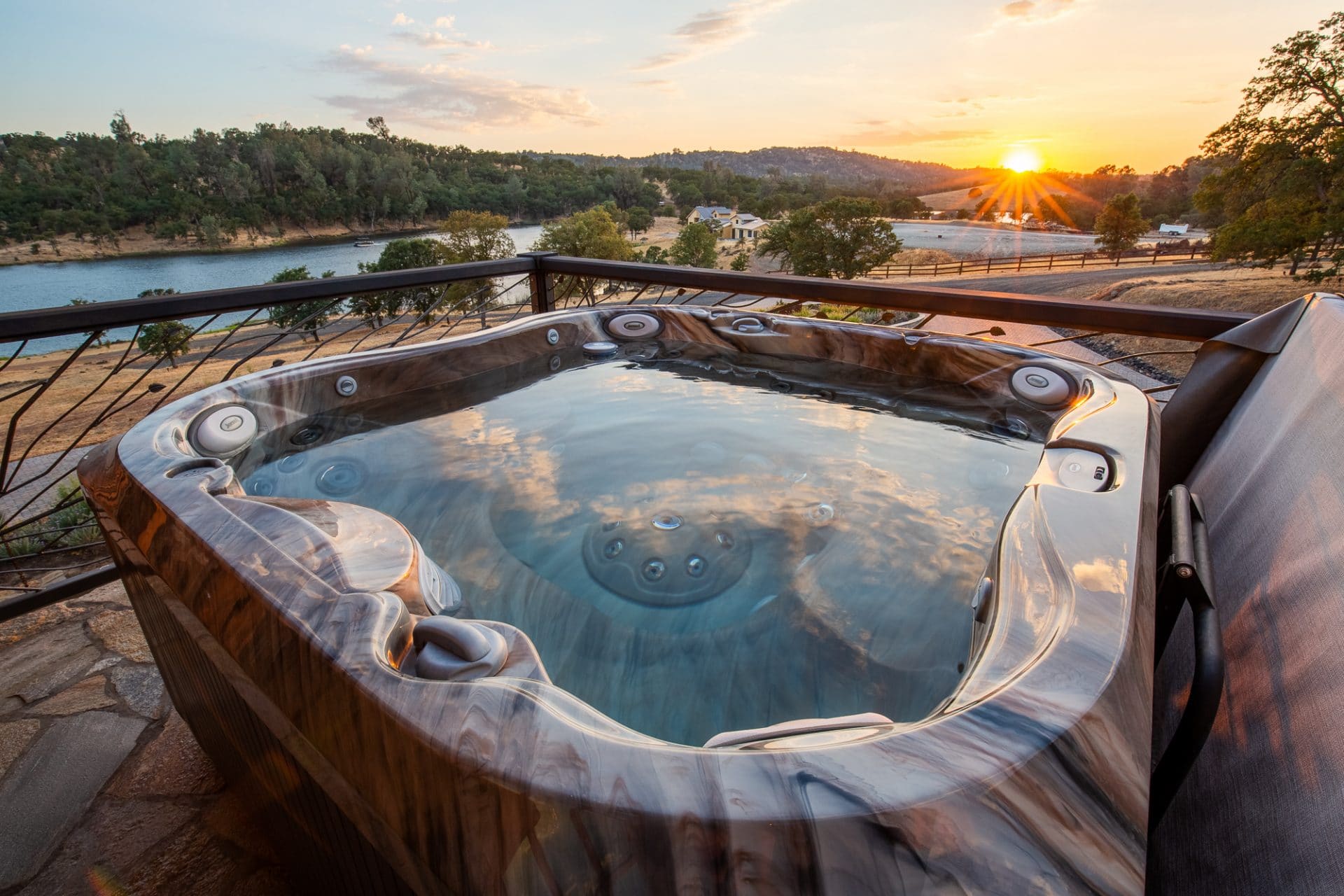
As housing costs continue to skyrocket, more people are warming up to the idea of living in the woods to escape rising rent and mortgage payments. But it’s not just about embracing solitude to cut costs; plenty of Americans want to live in nature because they feel happier and healthier in the great outdoors. While most are likely to live semi-close to civilization, some would rather live alone on a secluded island. If this sounds like you, it may be time to ask yourself – are you ready to live off the grid?
The Move Back to Nature
At some point in history, our ancestors thrived in nature while wearing nothing but loincloths and blanketing themselves with rocks. Okay, so that latter part may not be true, but there are plenty of studies that reveal a direct correlation between nature and happiness.
For instance, researcher Frances Kuo studied housing projects in Illinois with trees versus those without. She found that the housing projects with trees had lower crime rates and levels of aggression. The thinking behind this is that living in an environment with trees encouraged neighbors to spend more time outside socializing with each other, thus forming more meaningful connections.
Another study conducted by psychologists John Zelenski and Elizabeth Nisbet discovered that our emotional connections with nature shaped our attitudes and lifestyle choices. They found that our connection to nature correlated with our well-being, and that it was distinct to other connections in our life such as those with family and friends. More importantly, psychological connections with nature were found to positively influence attitudes toward sustainability, which is essential for preserving the environment.
And it makes sense. Nature gives us the ability to disconnect from the fast-paced technological world we’re used to and connect with our more primal instincts. It also encourages us to take better care of the planet when we’re constantly interacting with the natural world around us. So now that we understand nature makes up happier people, what’s not to love about living off the grid?
The Realities of Isolated Living
Supplies
Turns out there are some things you may not love about living in an isolated area, one of which being the inconvenience of obtaining supplies.
Gone are the days of walking down the street to Kroger for water and toilet paper. Depending on where you live, getting groceries could turn into a trek and a half. When shopping for supplies, it’s important for residents of remote areas to stock up as much as possible. However, for supplies like firewood and water, some homeowners in the wilderness like to chop their own wood. There are also ways to filter lake water for drinking and cleaning purposes. And if you really get hungry, you can always go fishing or hunting for your next meal. Best part, it’s completely free.
Emergency Care
The further you are from densely populated areas, the harder it is for first responders to reach you in the case of an emergency. Those living in remote areas are advised to learn first aid and pre-hospital care practices. This way they can assist themselves and others while waiting on emergency care professionals to arrive.
Extreme Weather
Depending on where you decide to live, you need to know what kind of weather to expect for every season, as well as any natural disasters at risk of occurring. Extreme weather poses a threat to even the most prepared and careful individuals. As a rule of thumb, it’s essential to own an emergency first aid kit, have plenty of water and non-perishable food stored away, heat and light sources, and be aware of any incoming changes in weather. If blizzards often occur in your chosen location, check out this helpful article from Eureka detailing survival tactics in the event of a snowstorm. Otherwise, it’s always a good idea to winterize your home or cabin prior to the winter season.
Could You Abandon City Living?
Isolated Doesn’t Mean Lonely
It’s often assumed that people who live alone or in isolated areas are lonely, but research shows that’s not necessarily the case. In fact, even some of the most densely populated cities in the world can feel incredibly isolating for residents who see hundreds of people in a day but never interact with them.
The reality is that there’s a clear divide between being isolated and being lonely. Those who are isolated but not lonely often demonstrate the following characteristics:
They enjoy their own company and tend to be reserved
They either have satisfying relationships with family and friends or have always kept to themselves
They usually don’t have children
They’re self-sufficient people
They spend holidays alone by choice
If you don’t find these characteristics relatable, remote living may not be the right fit for you. This is especially true if you wish for more friends or feel lonely quite a bit. But remember, everyone can feel lonely no matter where they live in the world so it’s essential to find an environment that matches your personality and lifestyle best.
Choosing Your Next Home
So now that you have a broad scope of what to anticipate before moving to a remote or rural area, here are a few additional details to consider.
Location
How far do you actually want to be from civilization? While some outdoorsy folks would be thrilled to live a secluded existence in the forest, others might find themselves on the fence. Are you willing to drive an hour, maybe two hours to your nearest grocery store, mechanic or hospital? These are all factors to think about prior to picking out your plot of land. The cheap cost of living in a remote area may be exciting, but just make sure it’s not the primary consideration in your decision.
Comfort
How comforting is it to live in isolation? Does the thought of being alone for hours, days, and weeks on end seem like a perfect living situation or a prison sentence? Depending on how self-reliant you are, you may find that you have no trouble adjusting to a life in the great outdoors. And while you may love using a composting toilet or bathing in the lake, it’s not a necessity for everyone living in remote areas. You can install modern plumbing or heating sources in remote structures, but it’s recommended that you hire a professional in case of complications. Keep in mind you could end up paying more to cover the travel costs for your handyman. Nevertheless, it’s better to know your comfort level rather than try to adapt to a lifestyle you’re not completely on board with.
Technology
Those who enjoy the small comforts of modern technology, like a computer with Wi-Fi or smart phone, might find themselves restless without the ability to easily connect with others on the Internet. If this is the case, you’ll want to ensure you have internet access set up in your new residence. Luckily, you still have plenty of access to modern conveniences, including solar panels, that make remote living feel less primitive.
And after all this, if you find yourself desiring a level of modern comfort while still feeling eager to get away, you may want to consider cabin living as a great middle ground. The choice is yours!